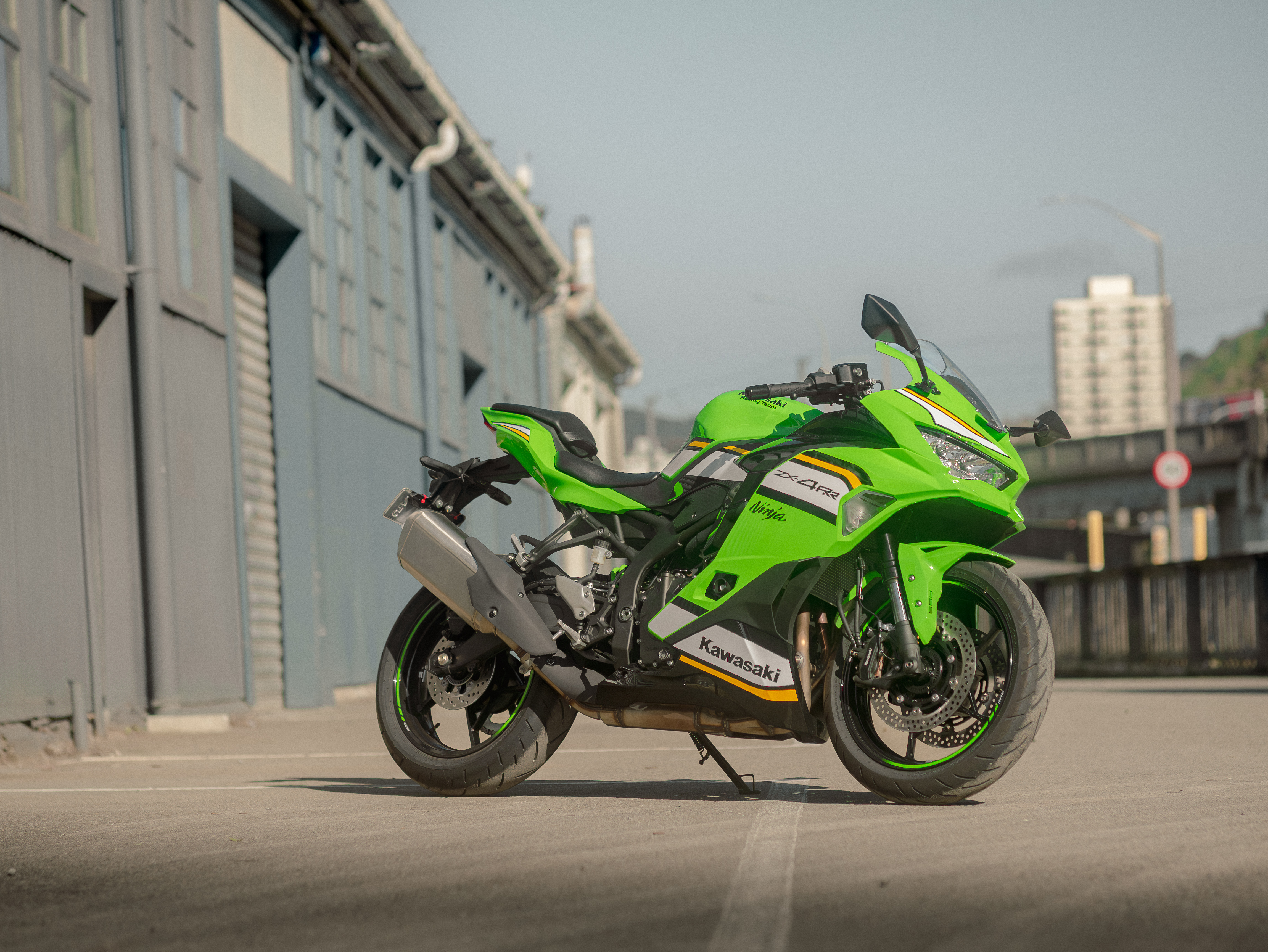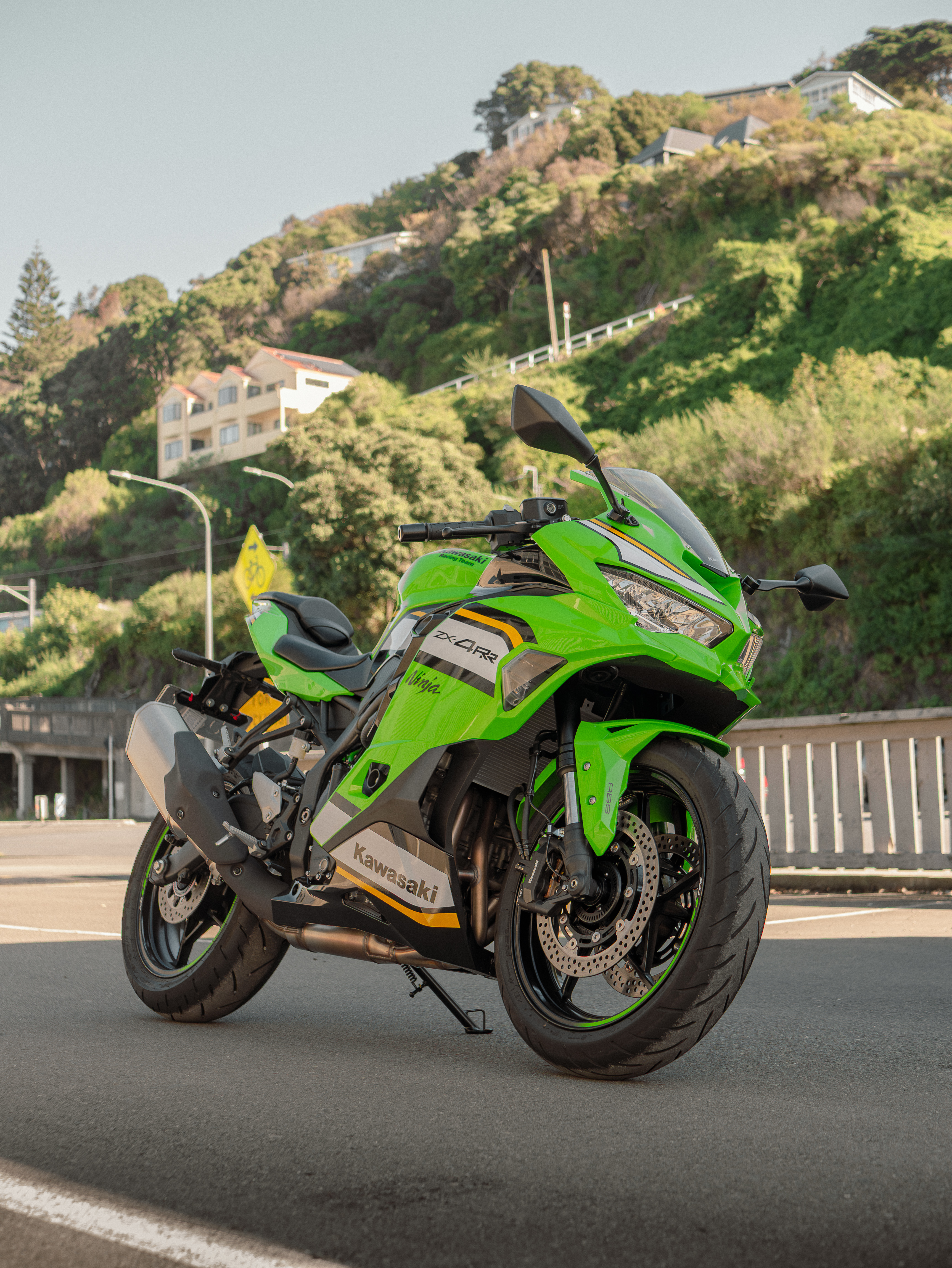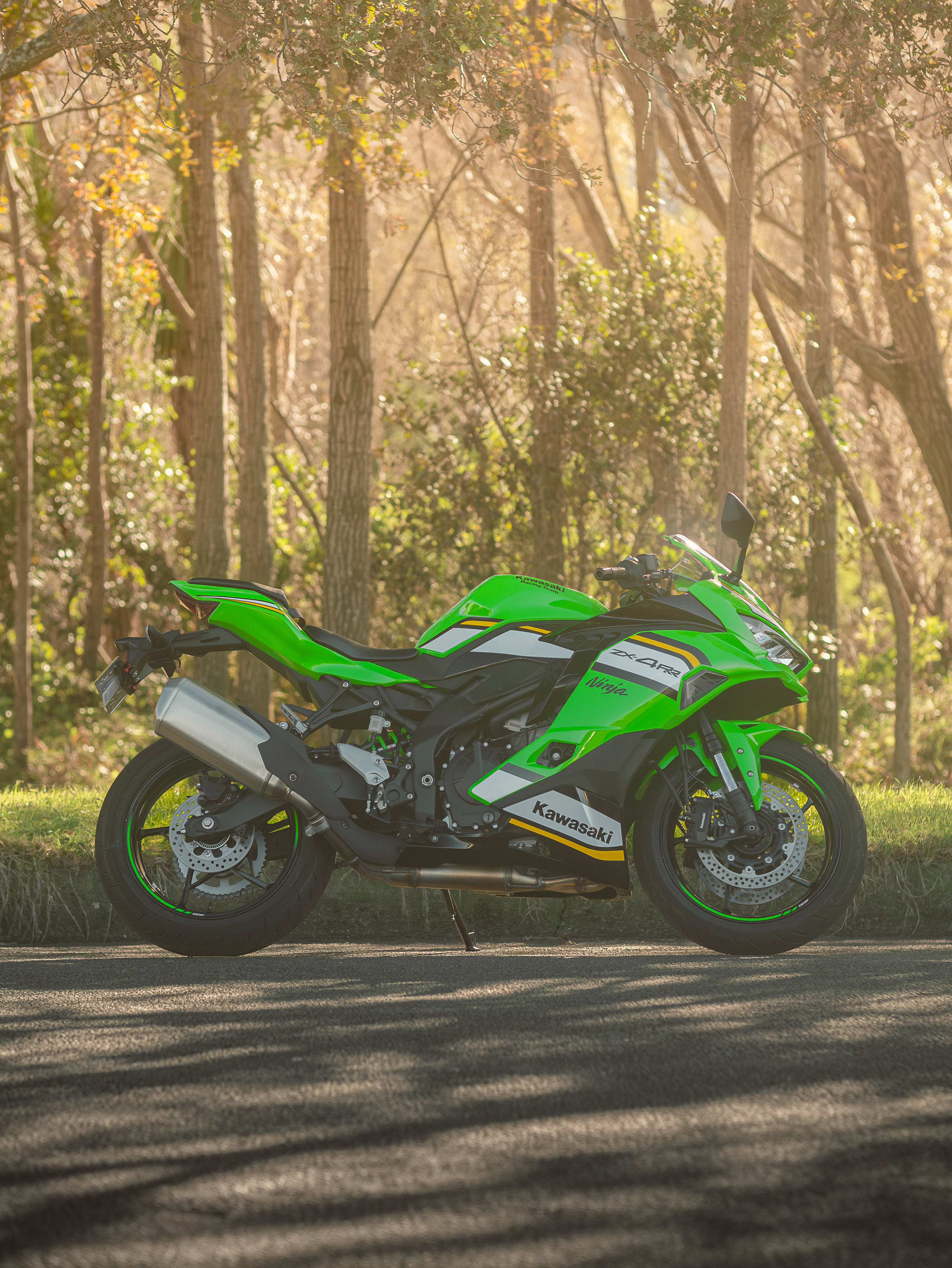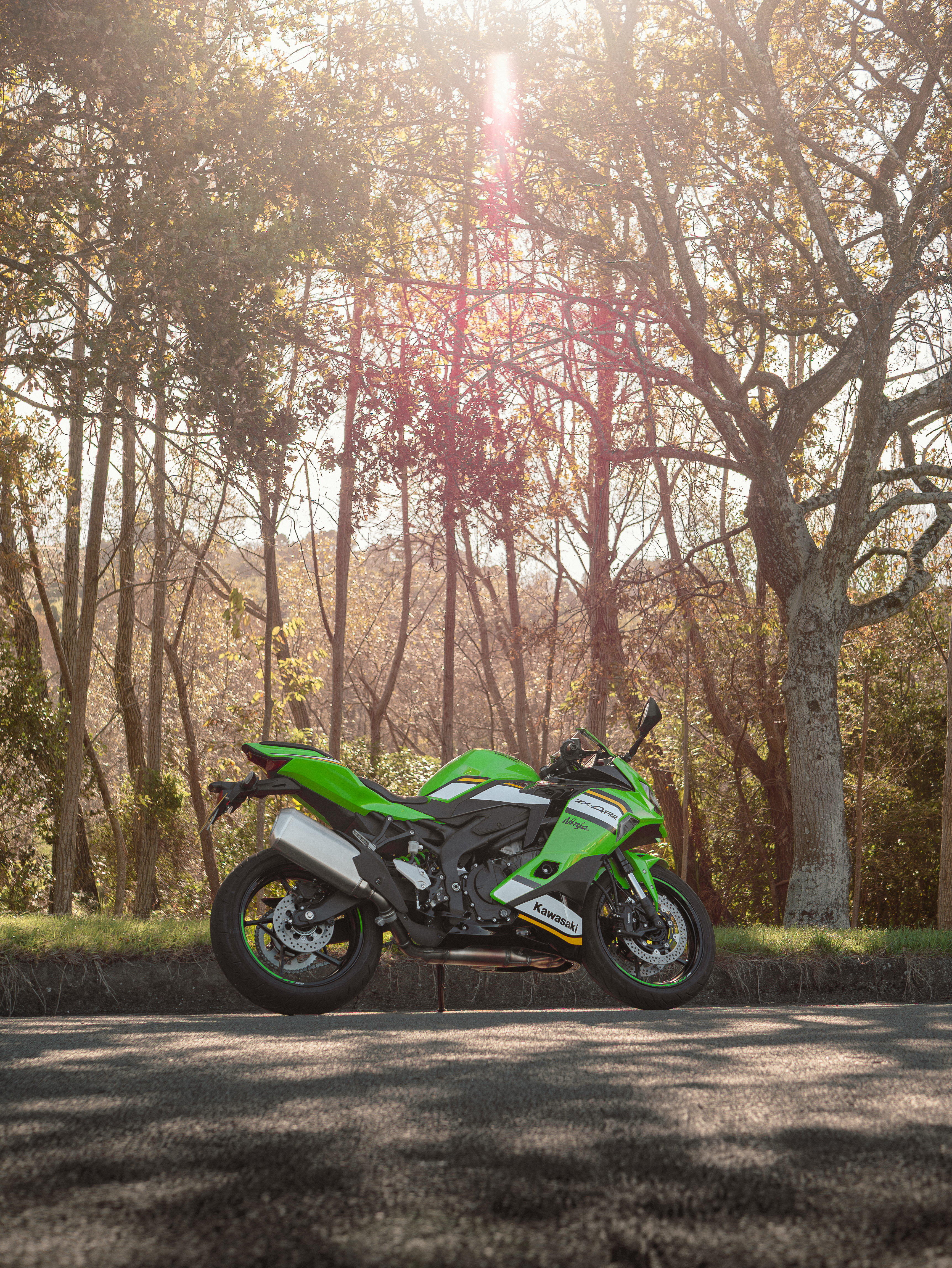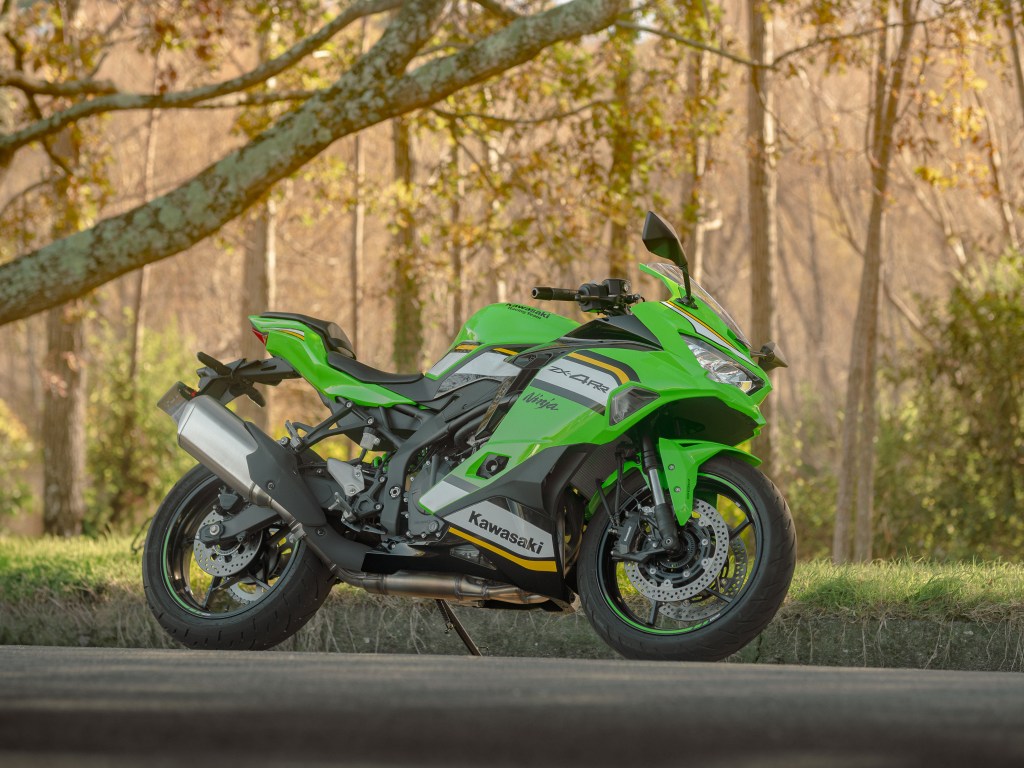
This 2025 ZX-4RR was provided by Cyclespot Wellington for a photoshoot and review. All opinions are my own, and this article was not reviewed or altered by the dealership prior to release.
Revs to 16,000rpm? Looks and sounds absolutely gorgeous? A 400cc inline-four sport bike with all the modern tech and features?
Can’t say no to that…
400cc Inline-Four — what’s the buzz?
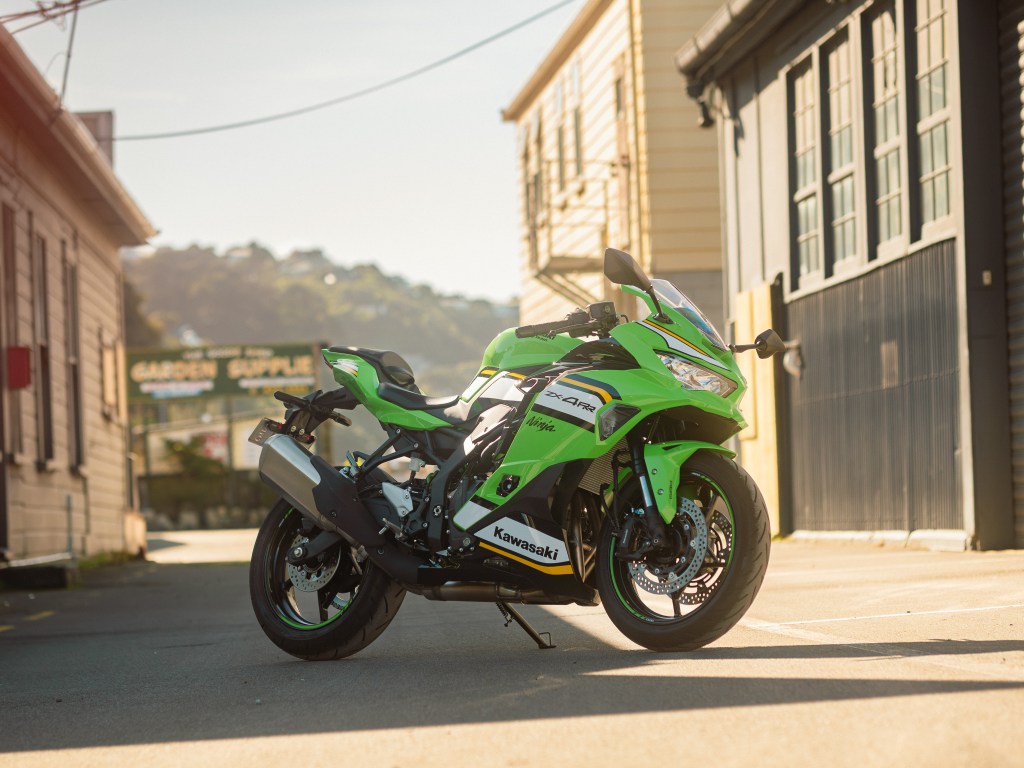
In the 80s and 90s, the competitive swarm of 400cc four-cylinders hitting the market was like no other. With the likes of the CBX400F, the VFR400R, the GPZ400R, and the ZXR400 (just to name a few) constantly striving to be market leaders, manufacturers were forced to adapt and change the formula to keep up with each other. In 1992, Honda released the CB400 SuperFour (SF), a model line that would become one of the last 400cc inline-fours available on the market. Despite all efforts, the Super Four was sadly discontinued in 2022 due to emissions.
Alongside the standard spec ZX-4R, the ZX-4RR was released in 2023, filling the sad void in the market. Where the CB400 was a LAMS-approved machine, these new green machines are certainly not for the learner market.
The wee 4-pot screamer pushes out 76 hp/57kw at a wailing 14,500 rpm, and that figure bumps up to 79 hp/58.7 kw with RAM air. Torque figures sit at around 39Nm at 13,000rpm, which is warranted given the nature of inline-fours, and is even comparable to the LAMS-approved parallel-twin that is the Ninja 400.
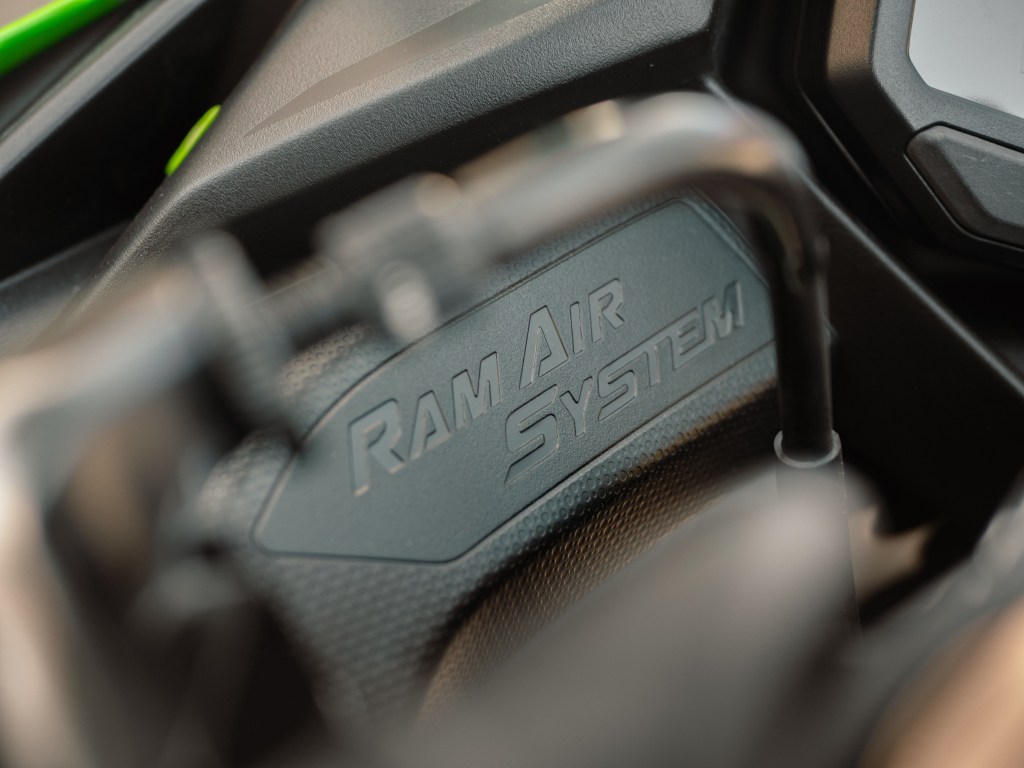
RAM Air System
Motorcycles adopted ram air intake systems in the early 1990s, and it is considered a trademark feature of Kawasaki sport bikes ever since. As speed increases, the air directly in front of the motorcycle gets mildly pressurised. A RAM air system — effectively just a forward-facing intake — feeds this denser air into the engine. This allows for more fuel to burn, and in turn, increases the power produced. While it operates on the same core principle as a turbocharger would, it works at a significantly smaller scale. For the ZX-4RR, a small bump from 76 hp to 79 hp can be achieved with the aforementioned RAM air. To see these effects, however, you have to be moving pretty darn quickly!
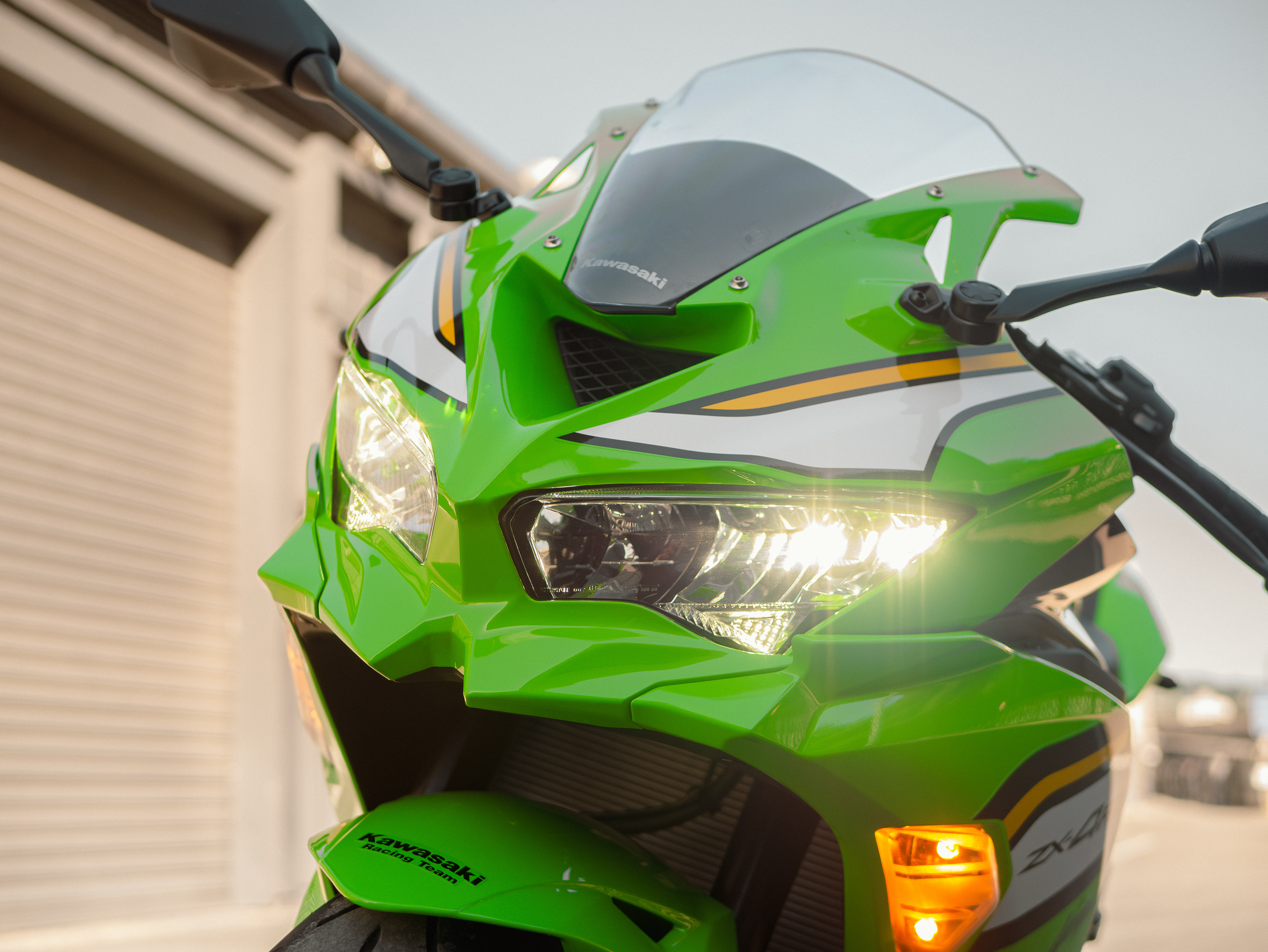
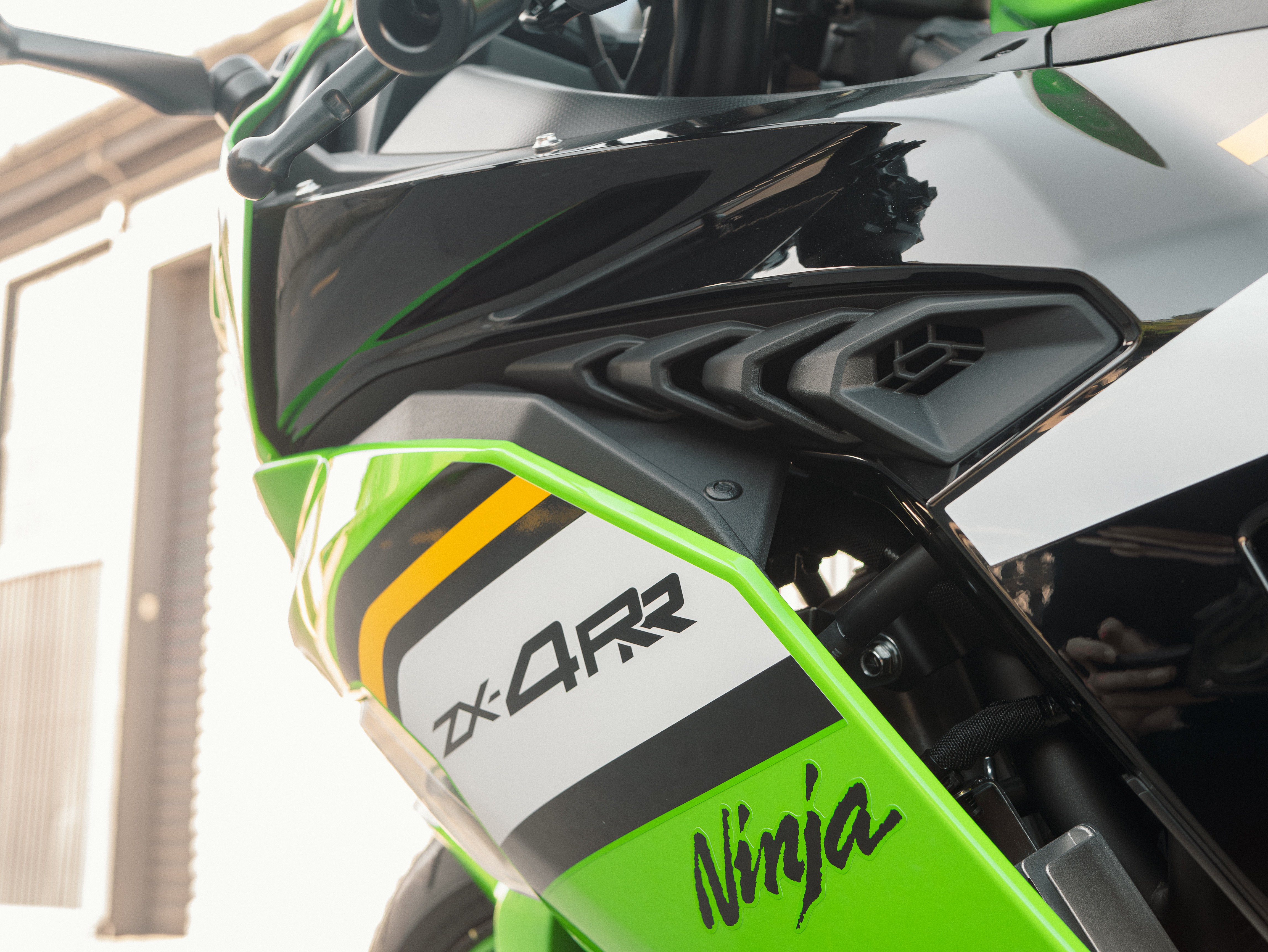
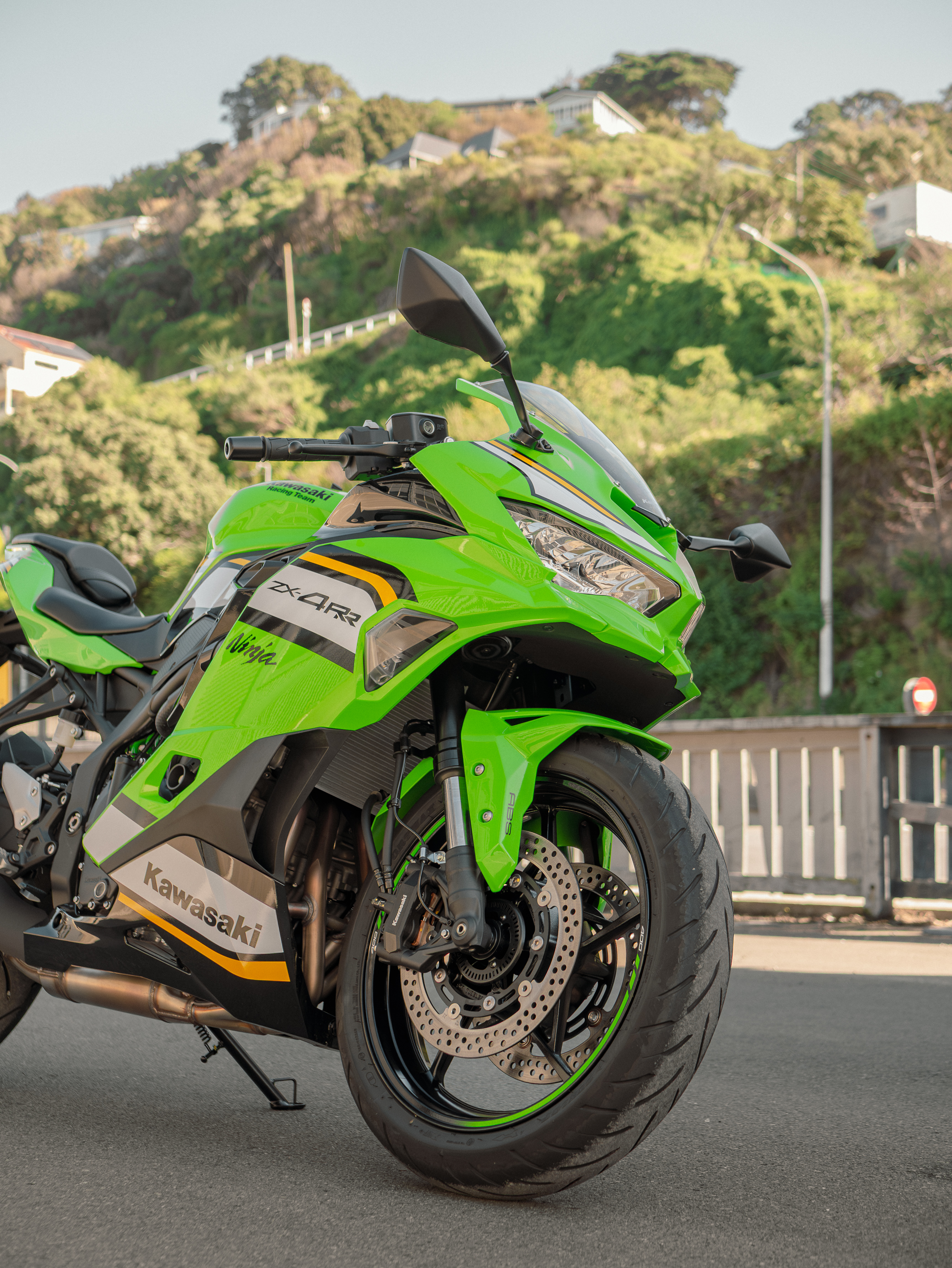
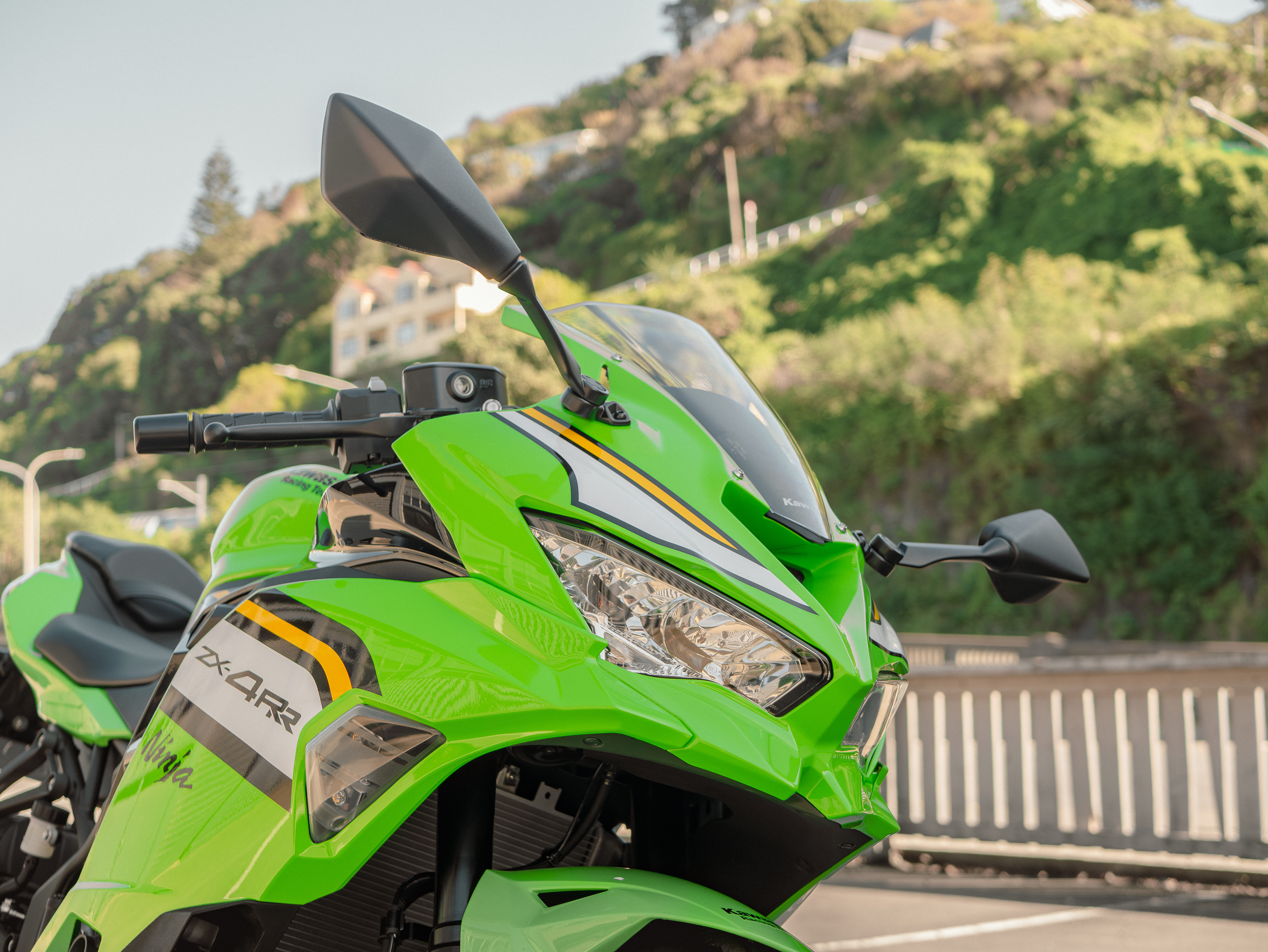
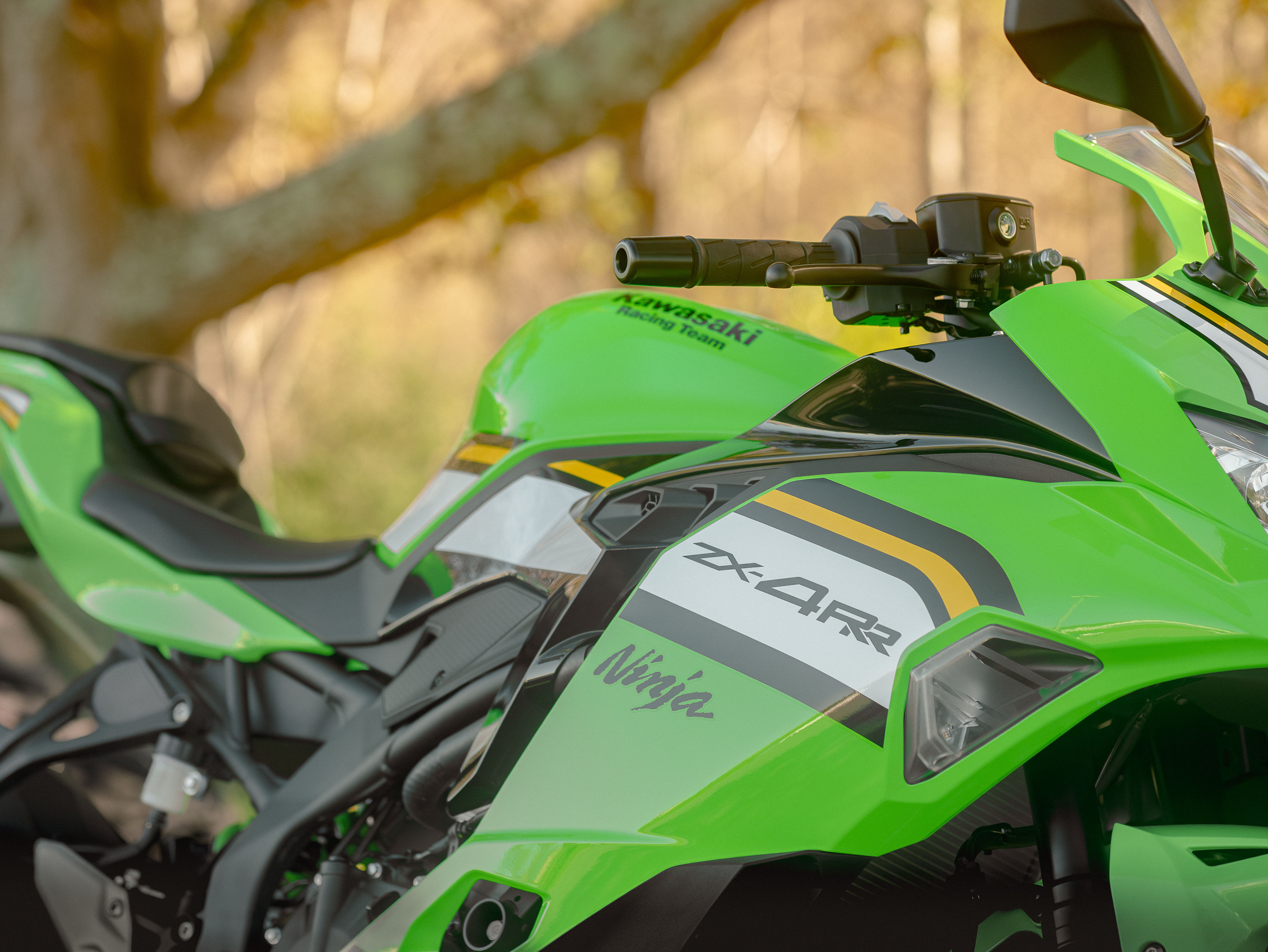
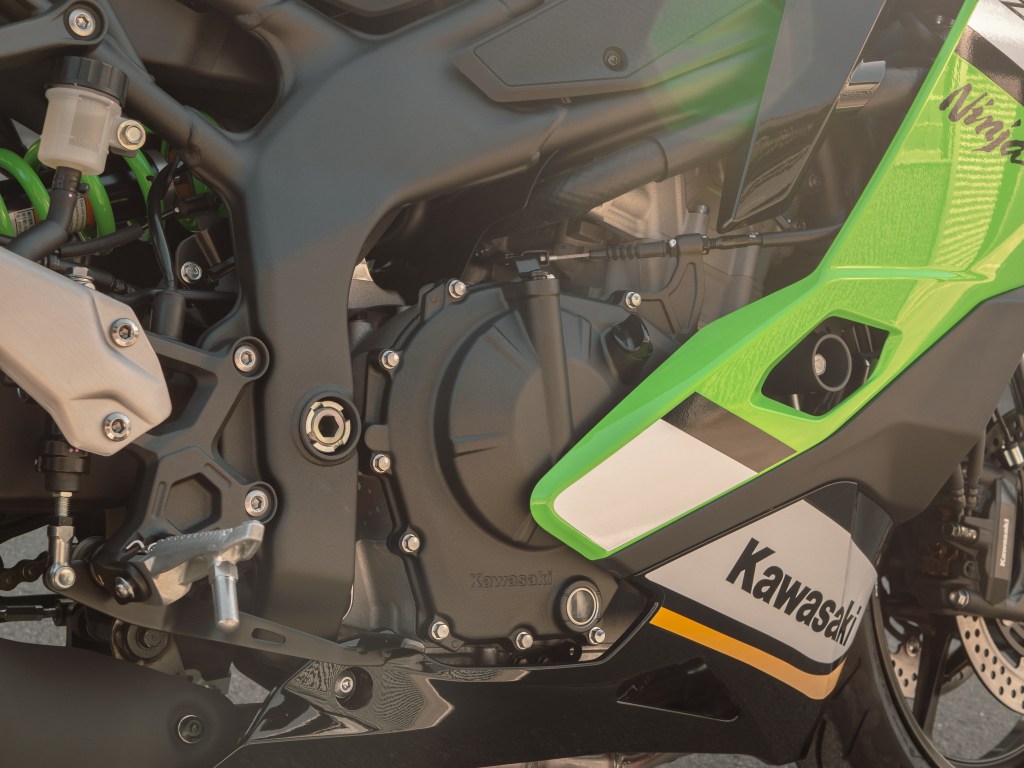
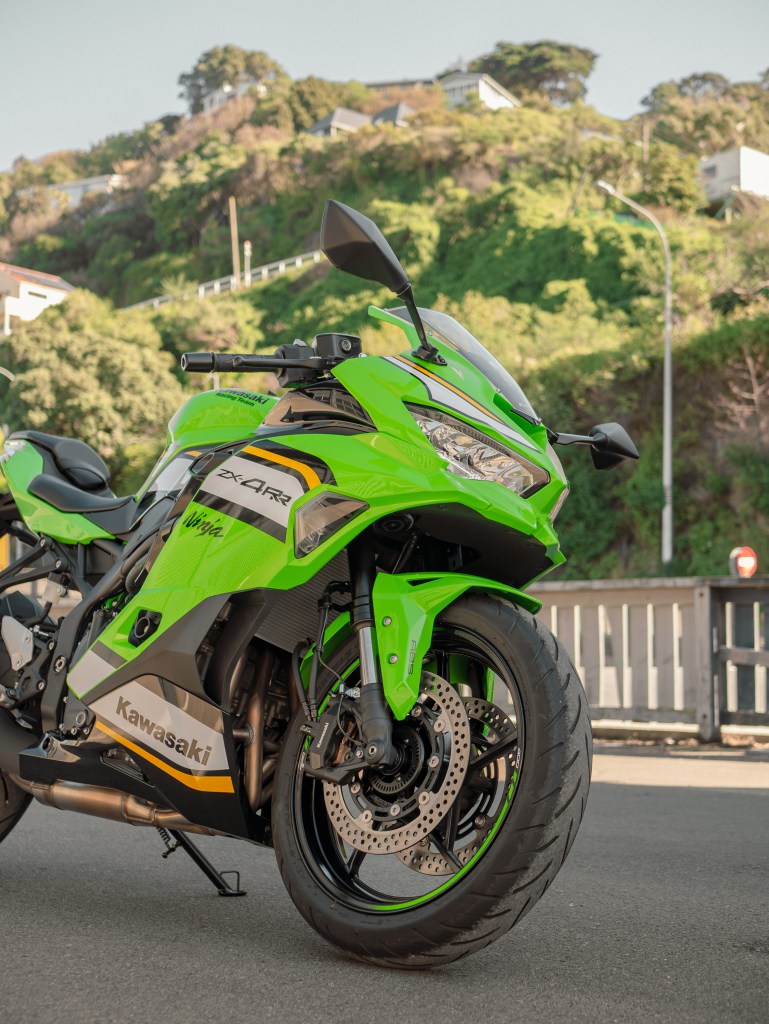
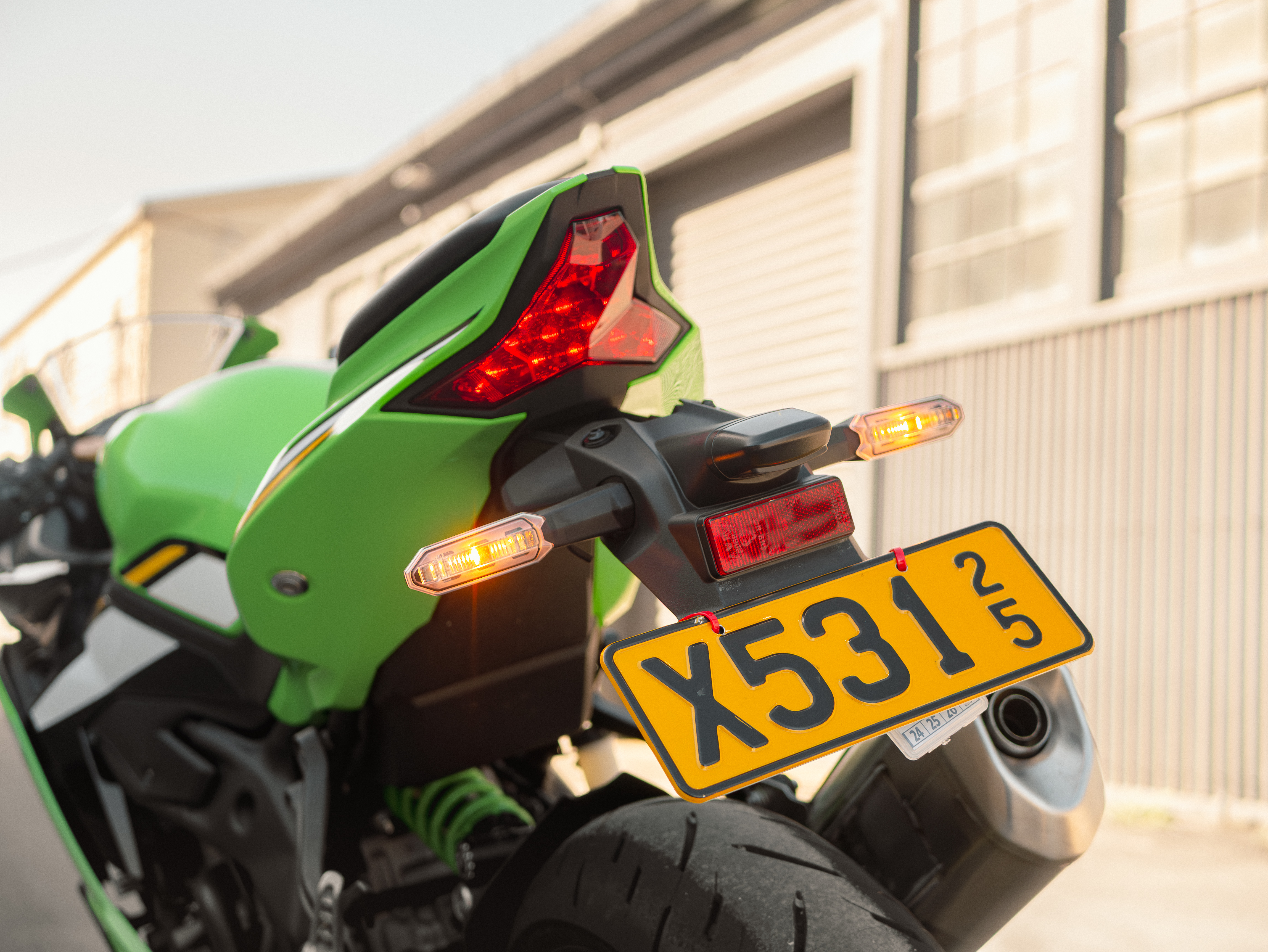
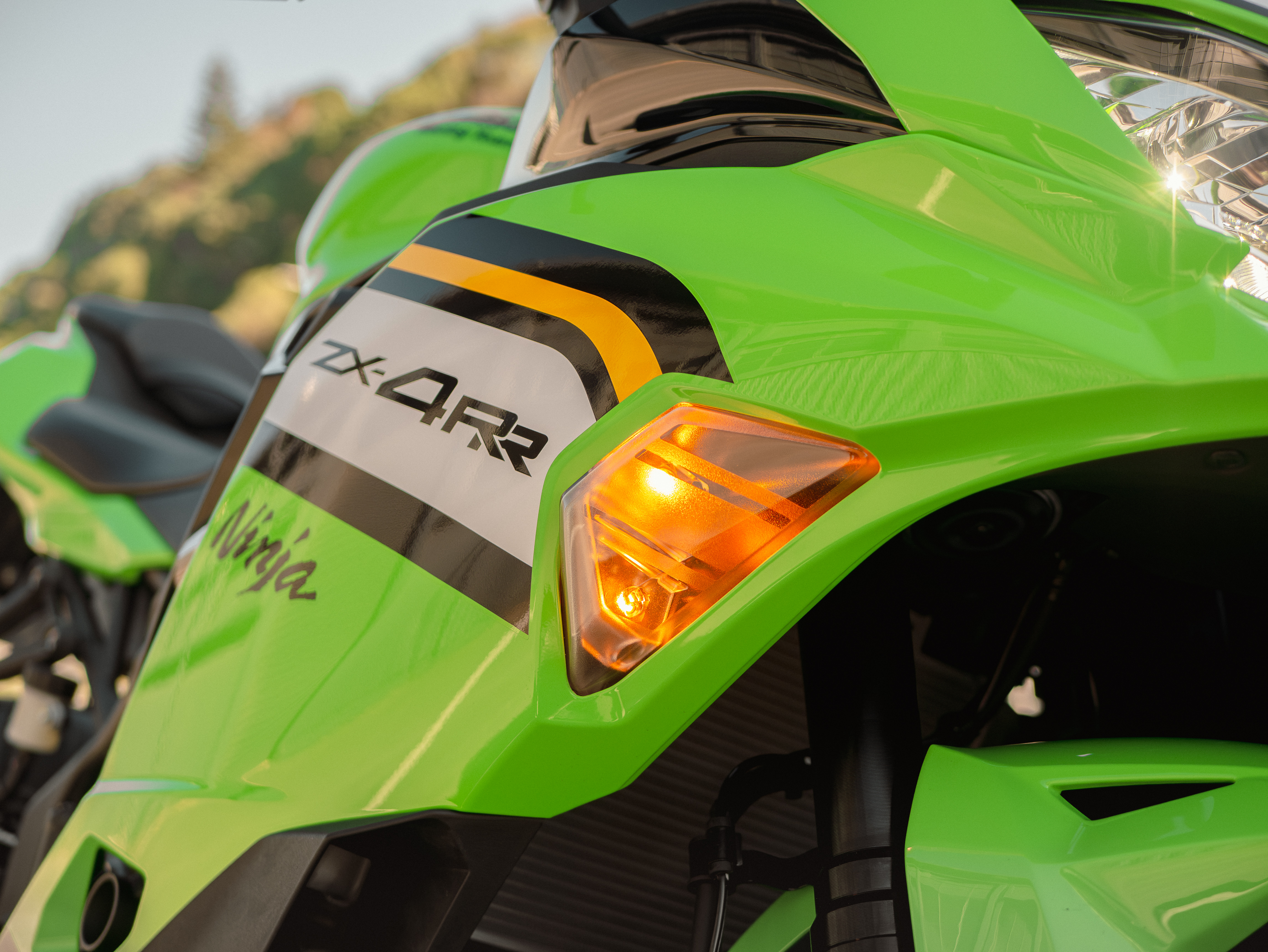
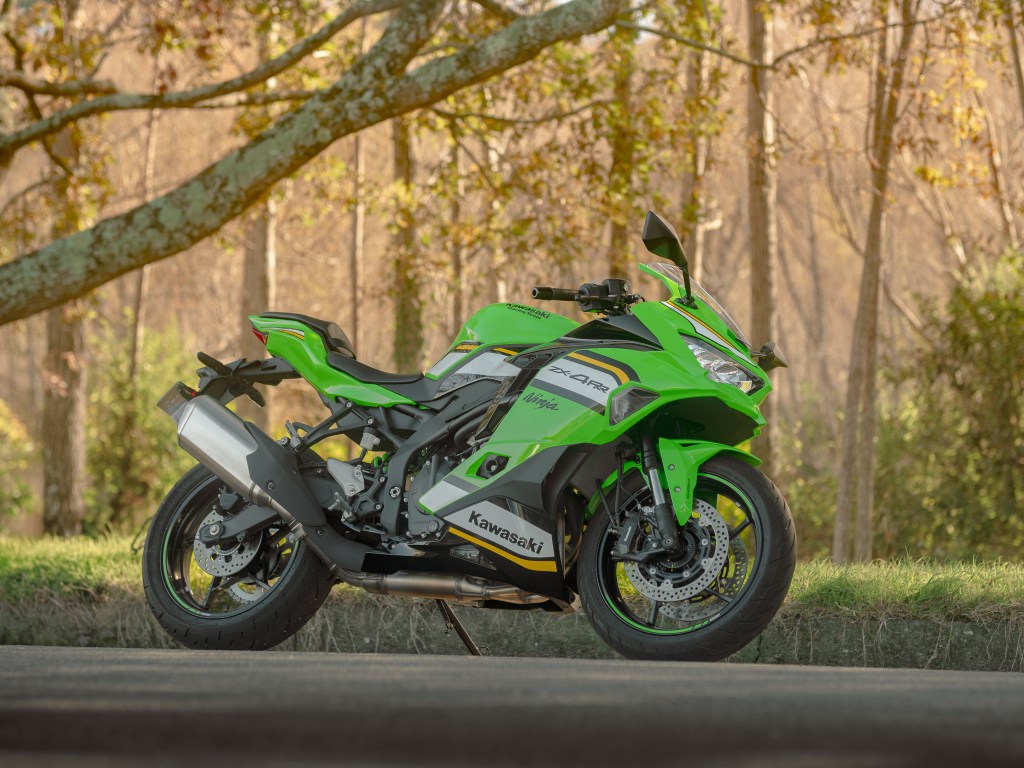
This example, being the KRT (Kawasaki Racing Team) edition, demands attention with its eye-catching green, white and gold colour scheme.
KRT Perks!
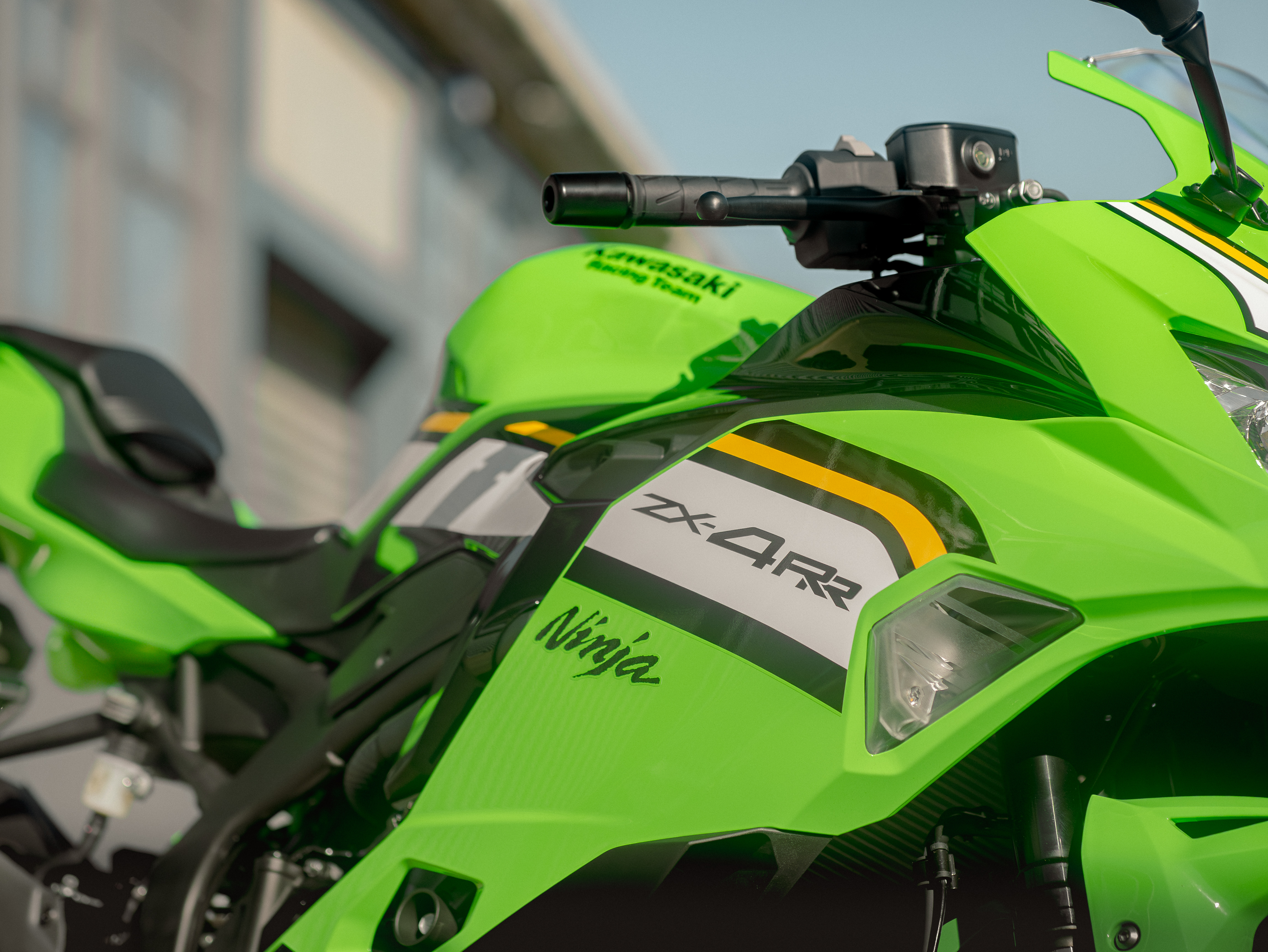
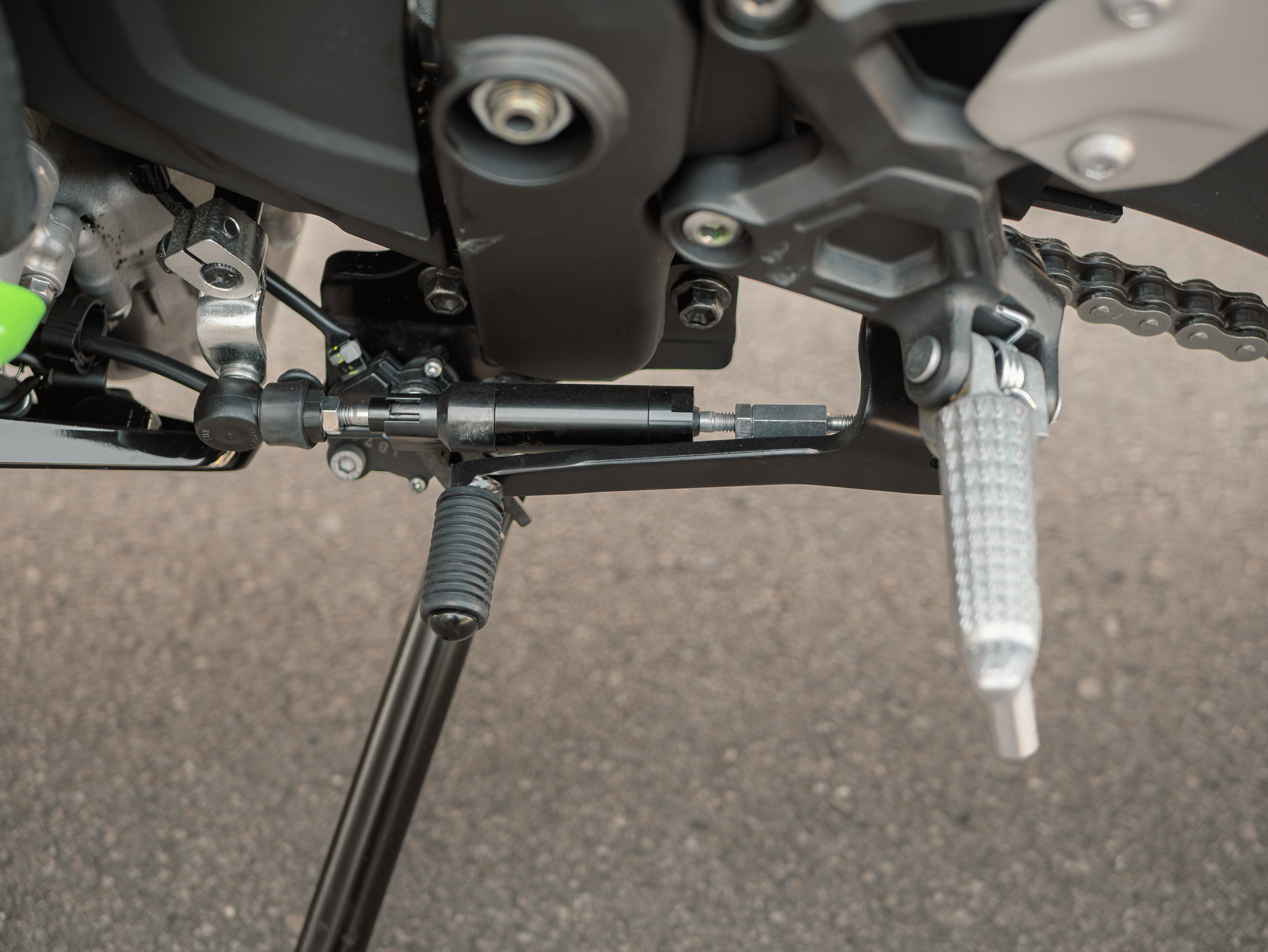
Besides the colourway, the KRT edition adds a few niceties to the mix. A bi-directional quick-shifter plays into the super-sport class well, and instantly gives it a step up over the standard ZX-4R. It’s buttery smooth to use, and lets you focus on riding the high of the upper rev range.
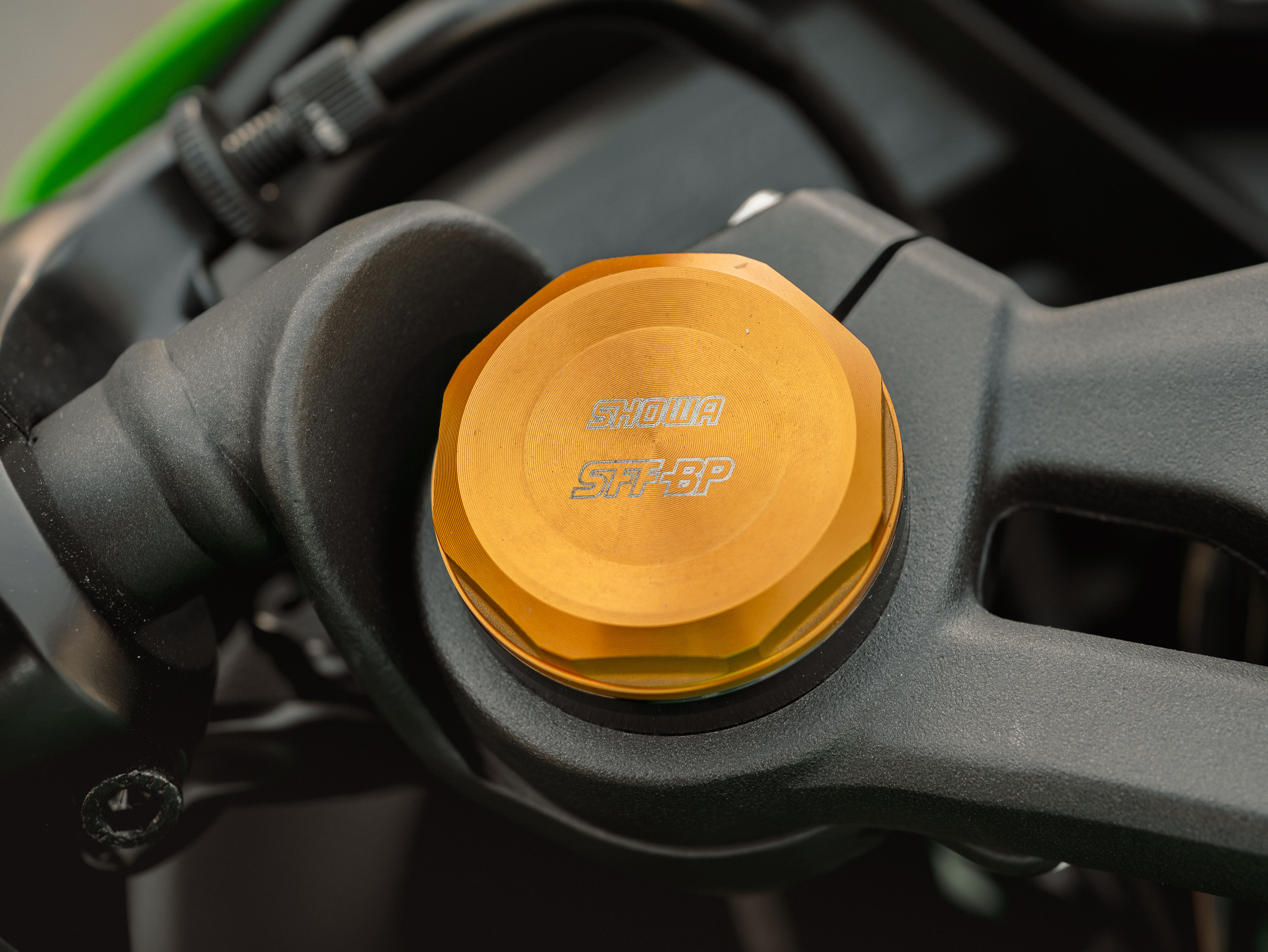
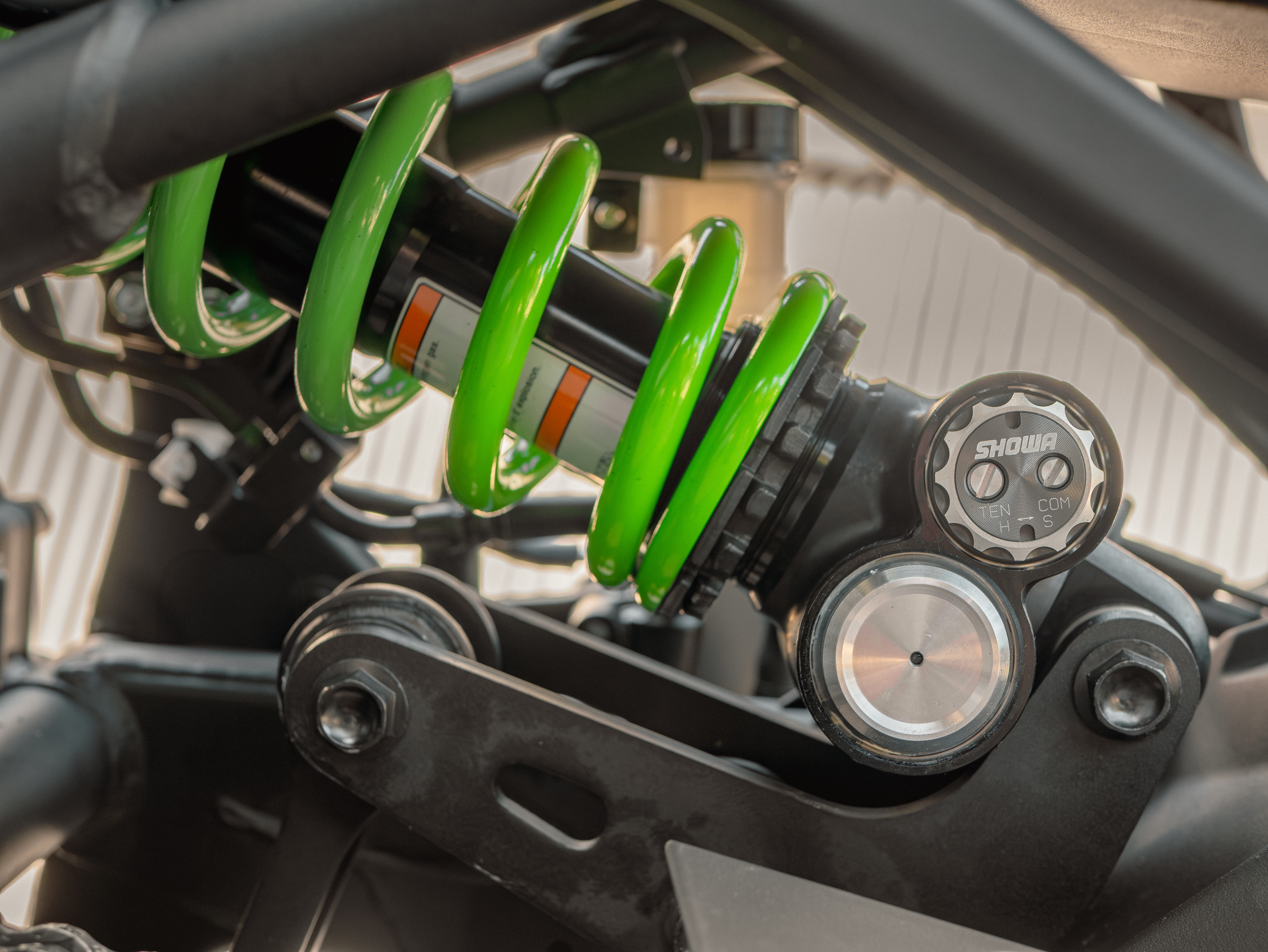
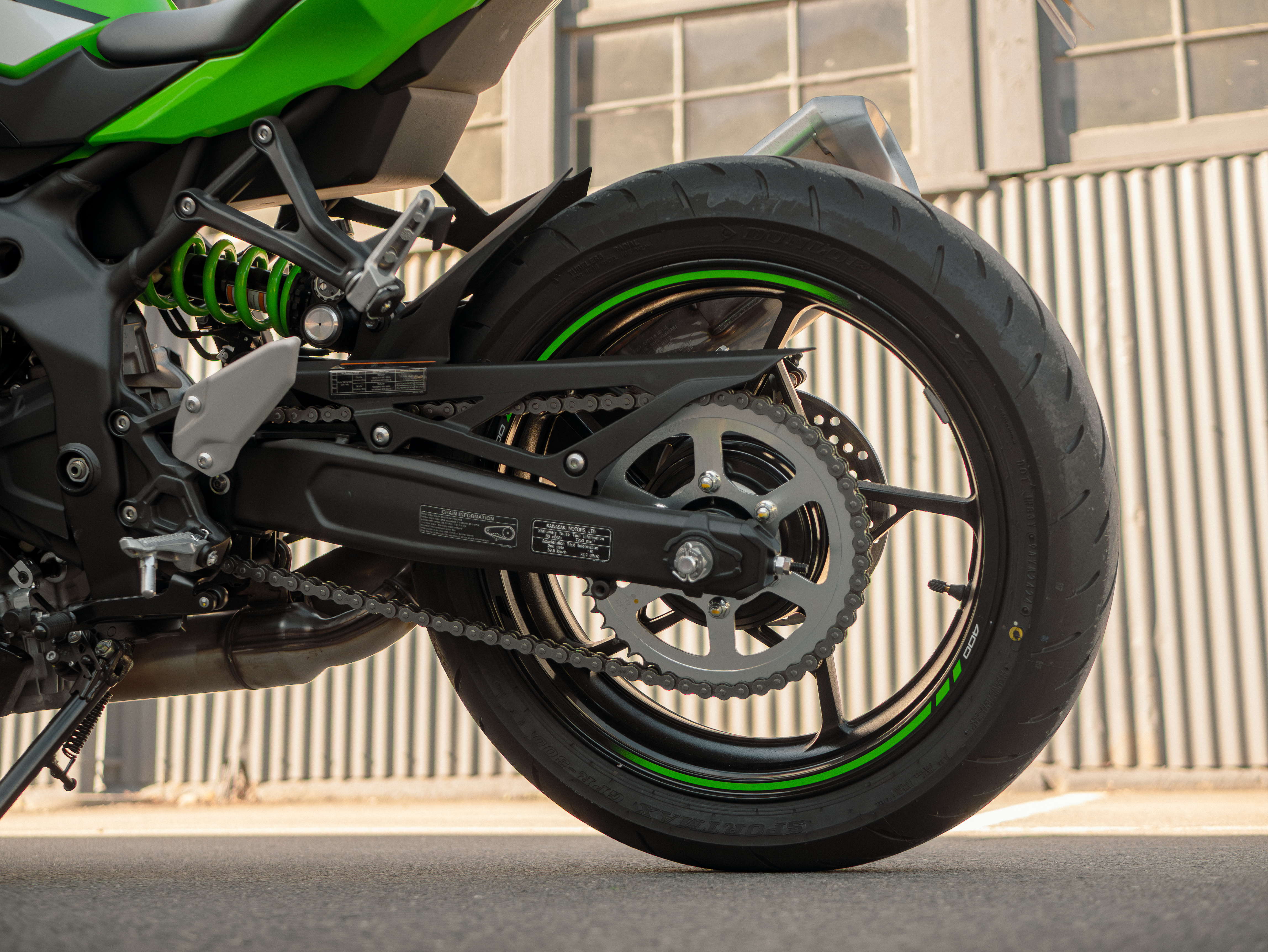
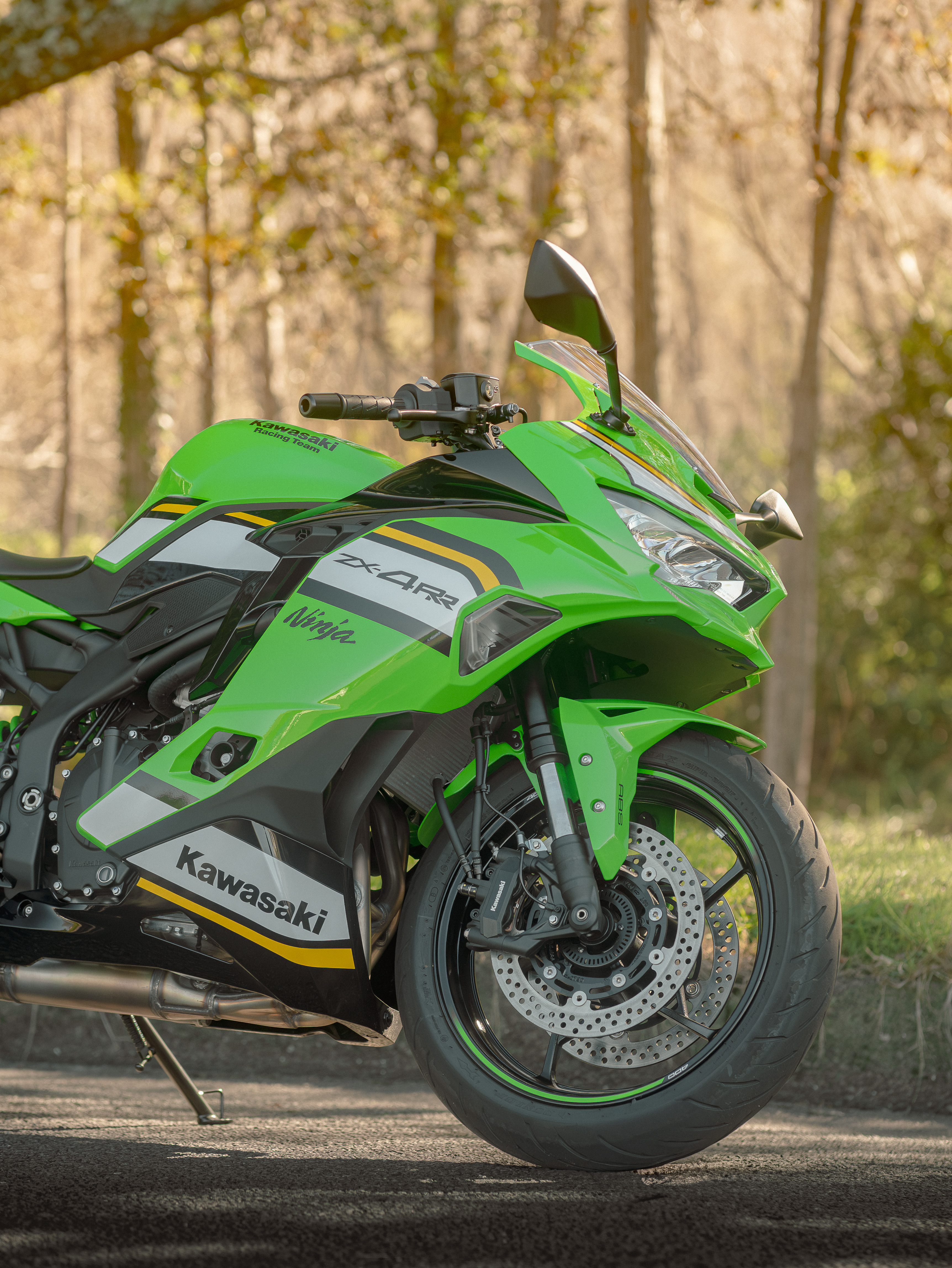
Suspension is also upgraded, with 37 mm Showa SFF-BP (Separate Function Fork – Big Piston) inverted forks up front, and a horizontal back-link in the rear. Both these components are almost unheard of when it comes to the 400cc class, and are welcome additions!
Reinforced by the slight stiff feeling around town, it’s no surprise that the suspension is pre-emptively set up for more aggressive, sporty riding. Dial it back a few settings, and I’m sure the suspension will accommodate a journey through town with better comfort. Use-case aside, the shocks give a healthy sense of feedback in the rear, and the adjustable compression, rebound and spring preload are bound to impress. Though I wasn’t able to push this bike anywhere near its limits (both for the sake of inner-city conditions as well as this being effectively brand new), the handling characteristics, even through snaky, rough roads, were a clear indication that this would be an absolute weapon on track. The ZX feels way lighter than the listed 188kg (wet) and lets you flick it into corners with ease, likely thanks to its compact geometry.
Racey Dash
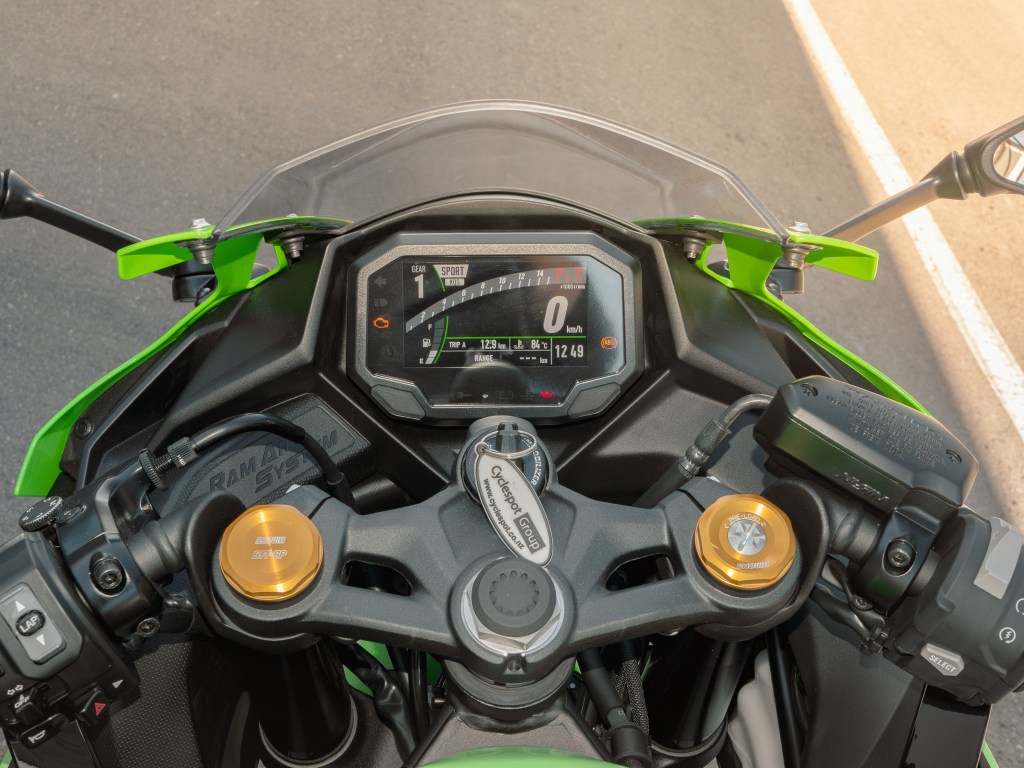
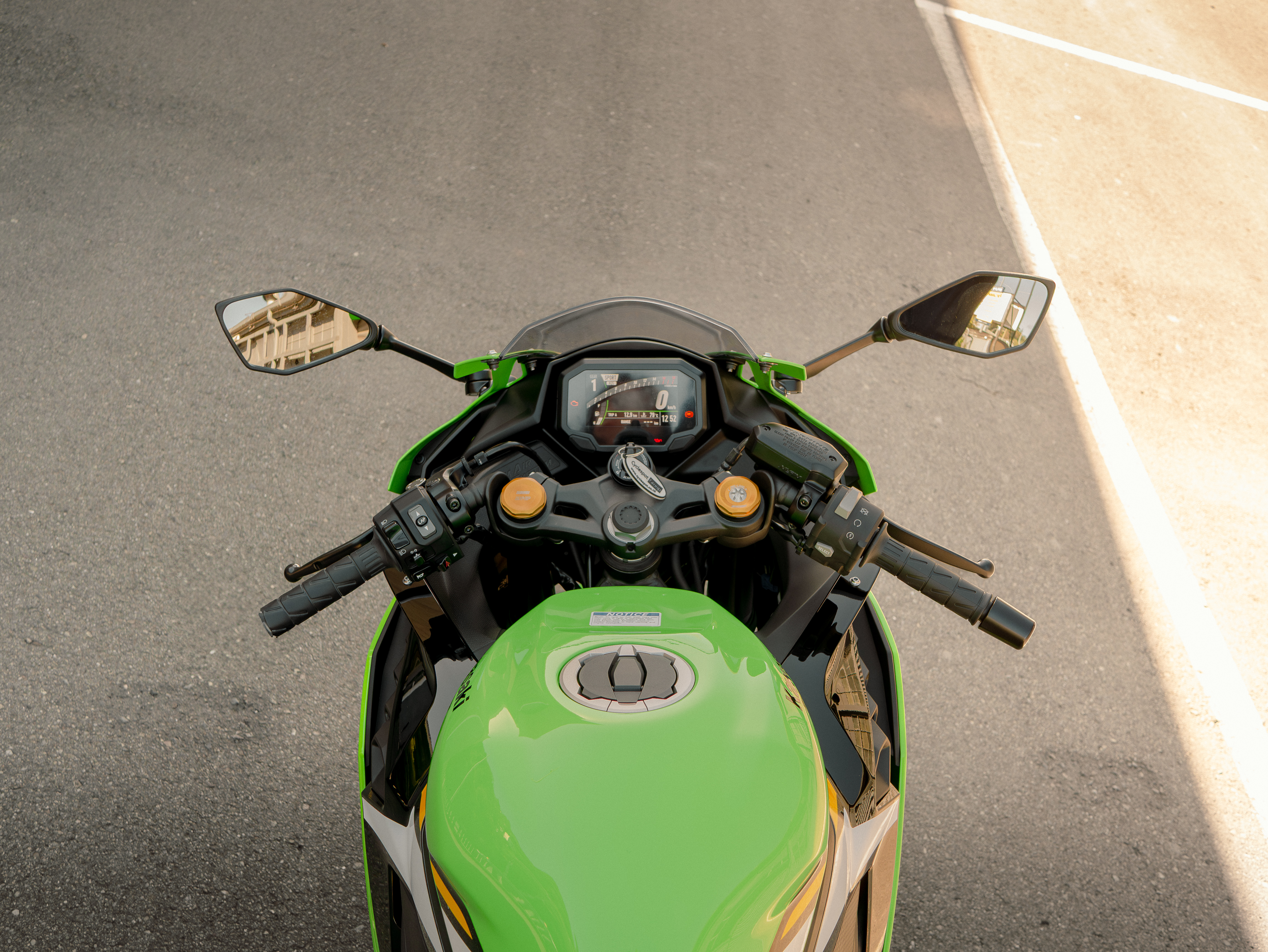
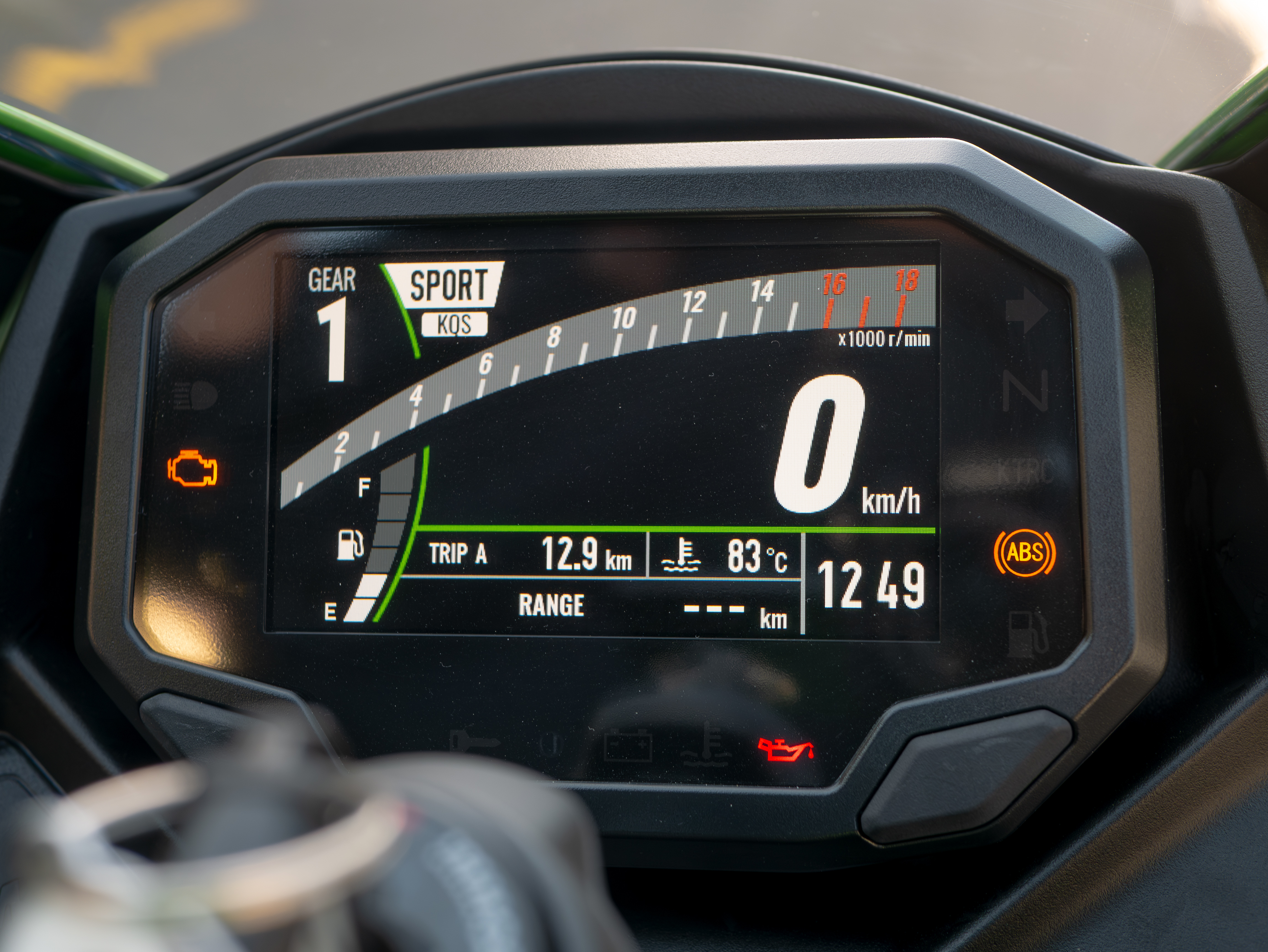
Hopping into the cockpit, the ZX-4RR offers a beautiful slew of features and details. It’s tightly managed, and the wideness of the fairing gives it a fuller look and feel. The 4.3″ TFT display offers easily navigable menus, and the option to switch to Circuit mode allows you to prioritise information that matters most (Gear Indicator, Lap Times, and tach past 10,000 rpm is more prominent!).
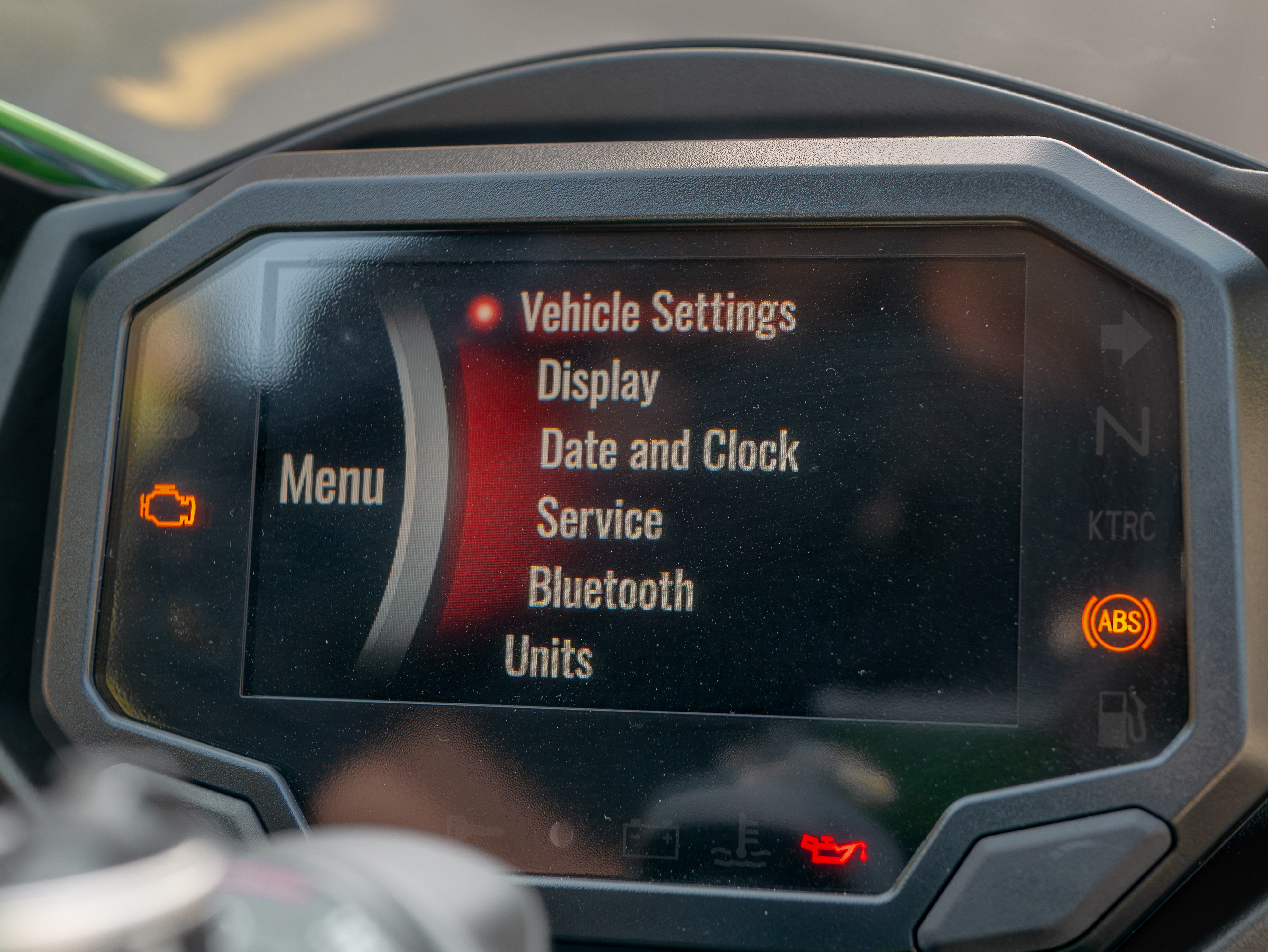
Though you won’t be using what I see as the ‘back-end’ main menu, the navigation and access could have been made much easier. This is where you can play with things like the shift light, display type and brightness, servicing information, Bluetooth (connect via RIDEOLOGY), and units.
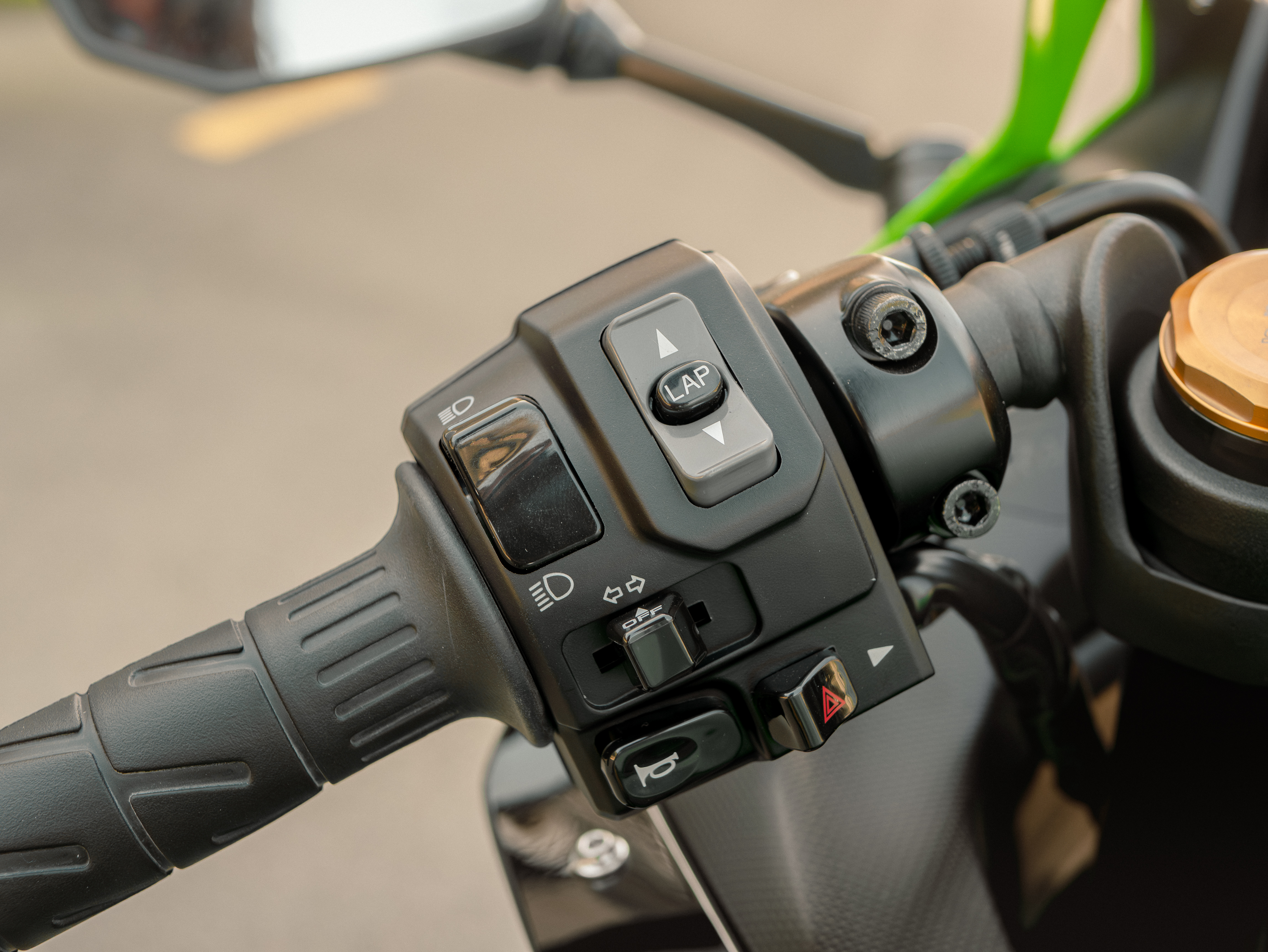
Holding down the two rubbery buttons on the dash simultaneously gets you here. It’s not to say that holding down two buttons is a difficult process, but when the hand controls had the space and capability of even one additional button (or a press-and-hold sitch), it feels a bit odd.
Ride Modes
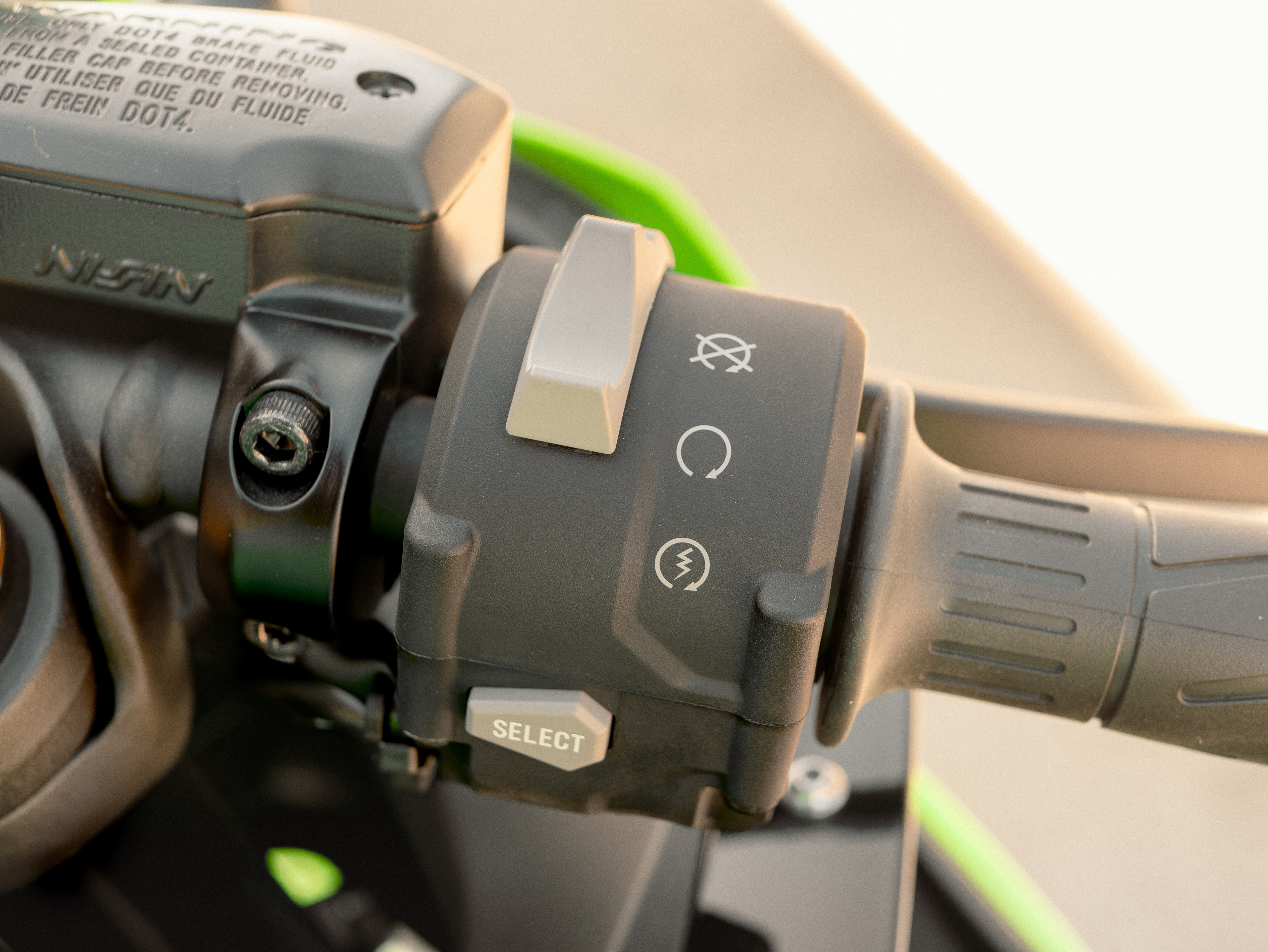
Switchable by holding the up or down buttons, four ride modes are on offer: Sport, Road, Rain, and Rider (Custom), each tweaking traction control and power delivery. Sport Mode offers snappy response and minimal intrusion of traction control, and was the mode I predominantly stayed in during my time with it. When it’s purring in the mid range, the power delivery is gradual (due to the nature of the four-cylinder), and even in Sport Mode, it is smooth enough for humming along around town. Road Mode feels a bit unnecessary given the comfortable usability of Sport, but it is an option there if you need it. Popping it into Rain Mode sets the power delivery to low, and TCS becomes quite domineering. Tweak it how you will in the custom mode, and there you have it!
Super-Sport Comforts
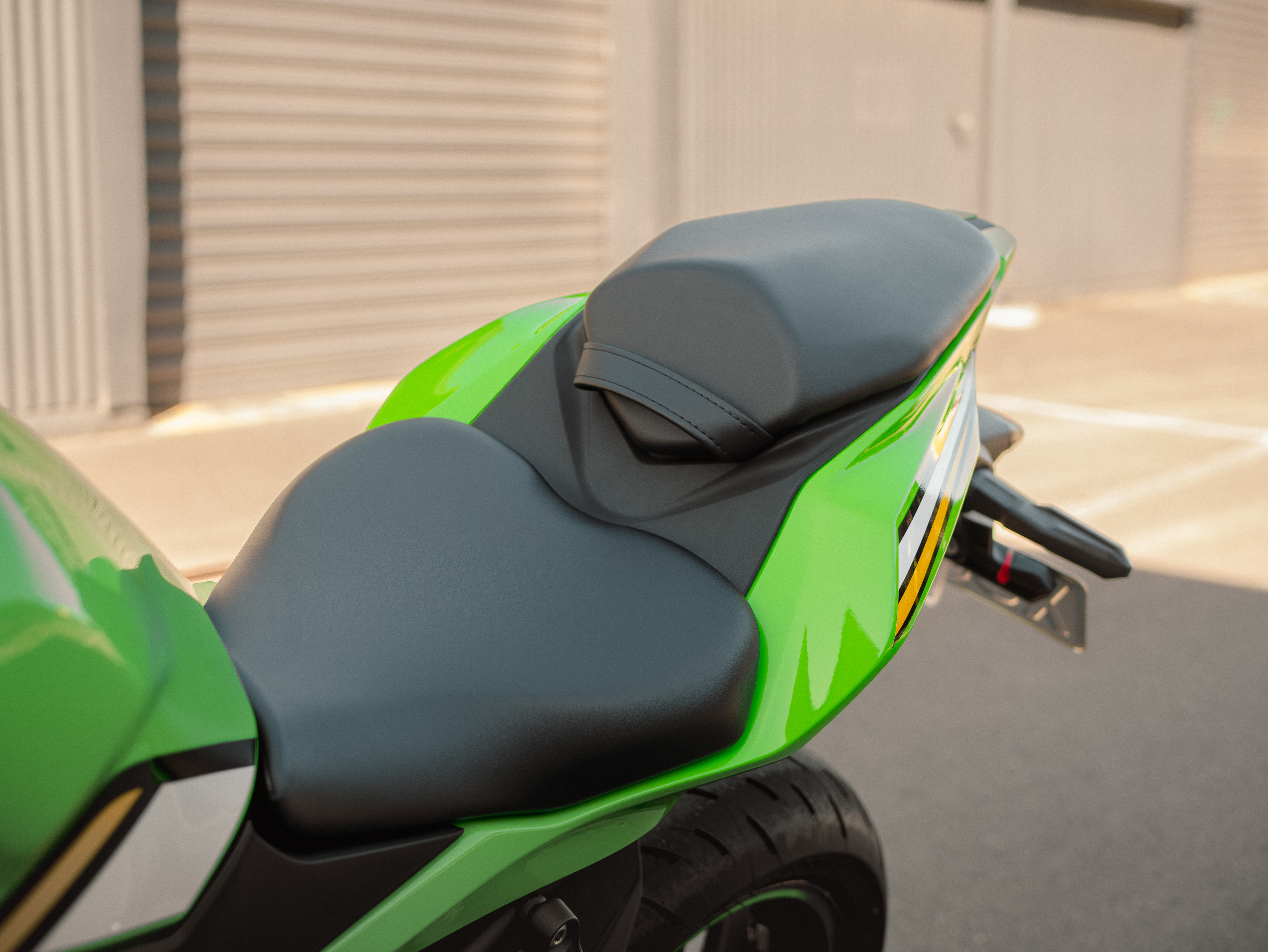
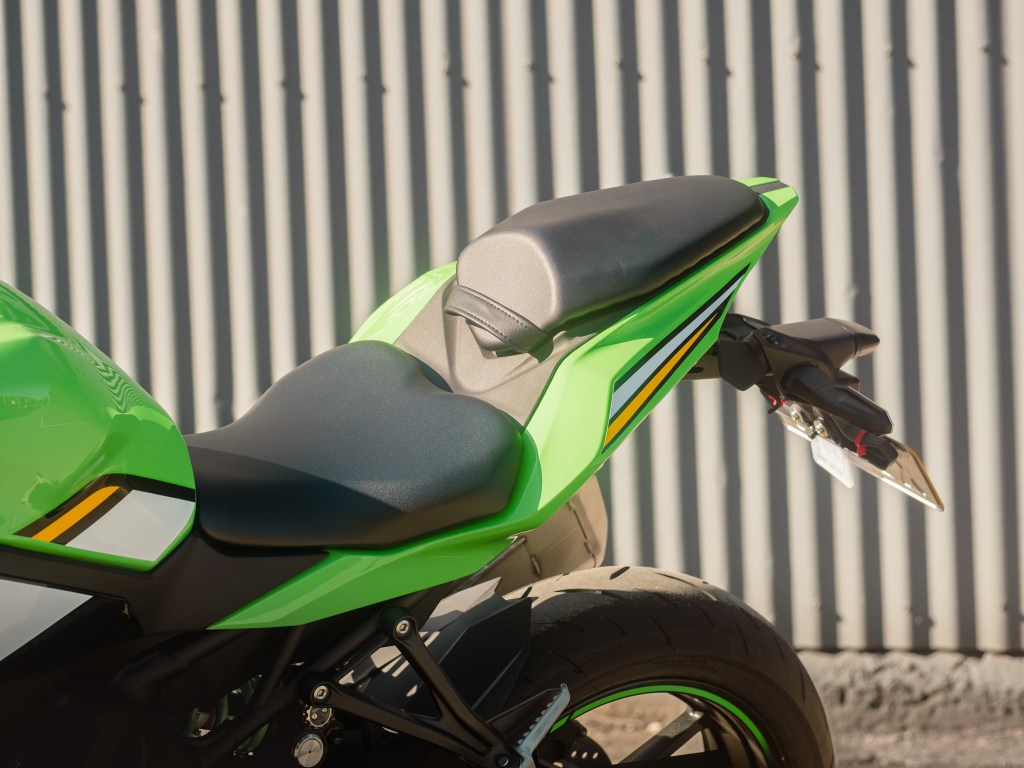
At first glance, you’d be surprised to find that the ZX is plenty comfortable for a sport bike. Even for myself at 6 feet, the bike feels ‘compact’ but doesn’t feel comically small. That feeling is definitely aided by the wider profile of the tank and fairings, giving the bike more substance all around. Inspiring confidence with its relatively low seat height at 800mm, which, for a sport bike, is generous, the ZX proves itself accessible. Swing a leg over, and the seat cushioning sits respectably within the expectations of a stock offering, and will allow for longer commutes if you need it to.
Coming to a halt
Up at the front, we have a beefy set of twin semi-floating 290 mm discs paired with radial four-piston callipers. A 220 mm disc with a single-piston calliper arms the rear, and both produce an exceedingly capable package of stopping power. ABS is fitted both front and rear, and is a peace-of-mind addition for all uses.
Four-Cylinder Symphony
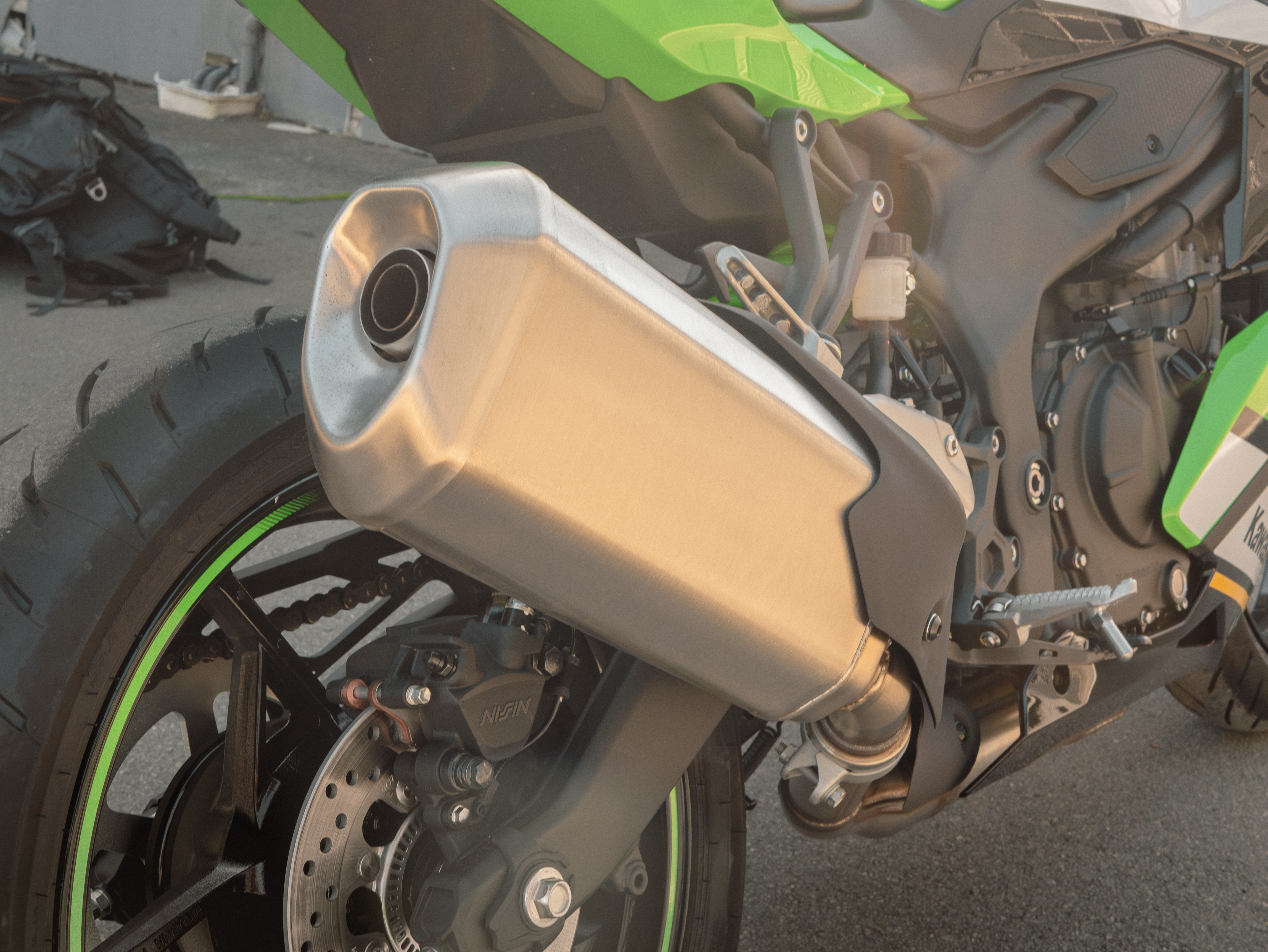
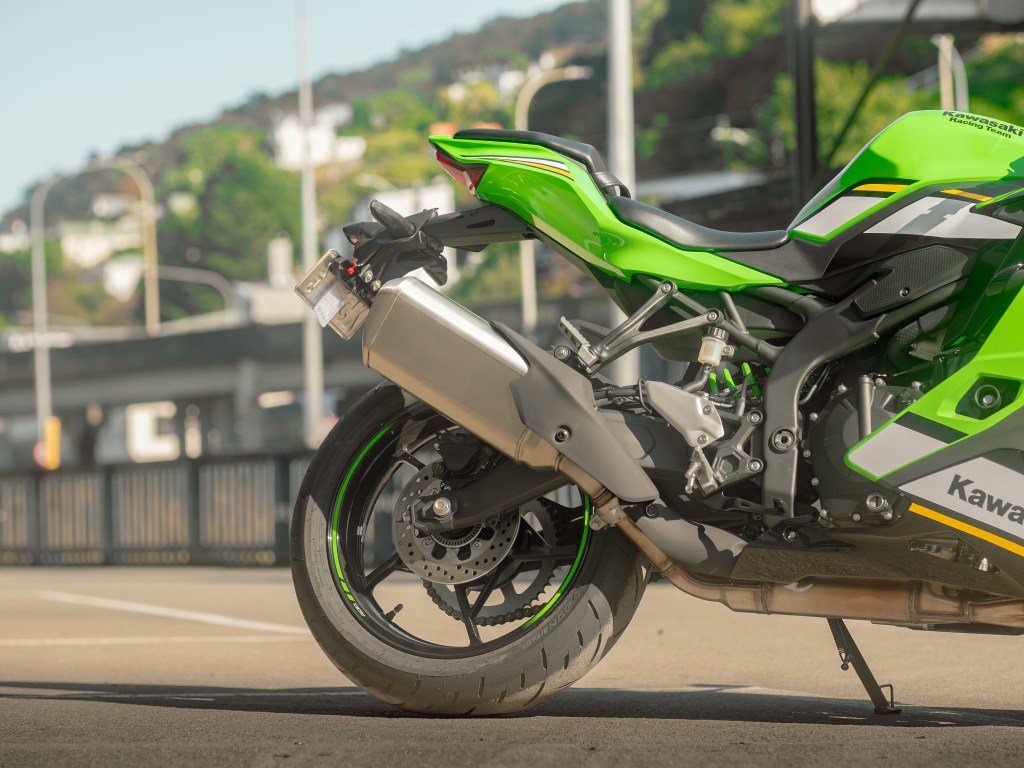
For a stock exhaust, the engine still winds up nicely and howls at those higher registers. It delivers a nice enough exhaust note that, for a daily bike, it might be better off bone-stock. Especially after power really kicks in after 10,000 rpm, the exhaust note becomes a crystal-clear rasp and continues to deliver that all the way up to its redline. It’s an addictive sound, and keeps you hungry for where the real power is! Kawasaki offers an Akrapovič Slip-on system as an accessory from the factory, though you can’t go wrong with any aftermarket offering in that regard.
Final Thoughts
What a blast.
Given my ownership and love for the early 2000s 400cc inline-fours, I felt right at home with the ZX-4RR, despite it being a lot more sport and track-focused. The engine configuration is an absolute gem, and I have always wanted to see a modern take on such a cool formula. It feels like watching a 4K re-release of a classic movie you always loved — the core of it remains the same. It’s in the dress-up, the modernisation, and the added quality-of-life pieces that really bring this one home.
Unlike some lower-displacement bikes, it doesn’t look like it’s trying to look bigger than it is. The niche is evidently there, and people who know what they’re in for will absolutely love it. It has a market. It has a cult following. It’s just a matter of whether you’re willing to invest in the culmination of an old formula reimagined.
This example is currently at Cyclespot Wellington, and it’s eager to get out there! A huge thanks to the team for sorting me out with this demo and giving me a walk-through of the bike beforehand.
Gallery